Select Page

Written by Dr. Matthew Fuirst, Research Ecologist and Observatory Manager  

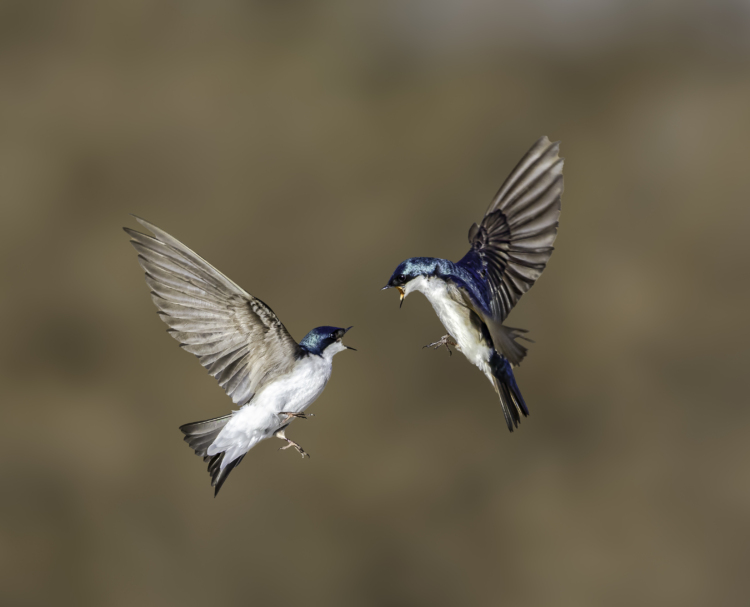
With an iridescent blue back and contrasting white belly, Tree Swallows are hard to miss when they fly about the meadows and wetlands of North America. In addition to their acrobatic flights and warm chirps, there is another feature in the landscape that may catch your eye – a nest box. Tree Swallows are cavity-nesting insectivores that use natural holes in trees to breed, but will also use artificial nest boxes. Due to their widespread distribution and faithfulness to nest boxes, Tree Swallows are easy to observe and study.  

Photo: Daniel Huang

Insects, the most species-rich group of organisms on Earth, are experiencing severe declines in abundance across North America. At Long Point, Ontario, one of the richest, most biodiverse landscapes in Canada, these declines have led to a loss of approximately half of all insect biomass in the last 50 years due to land use changes, climate change, and use of chemical pollutants. As a result, Tree Swallows, one of Canada’s most cosmopolitan aerial insectivores, are undergoing population decline. 

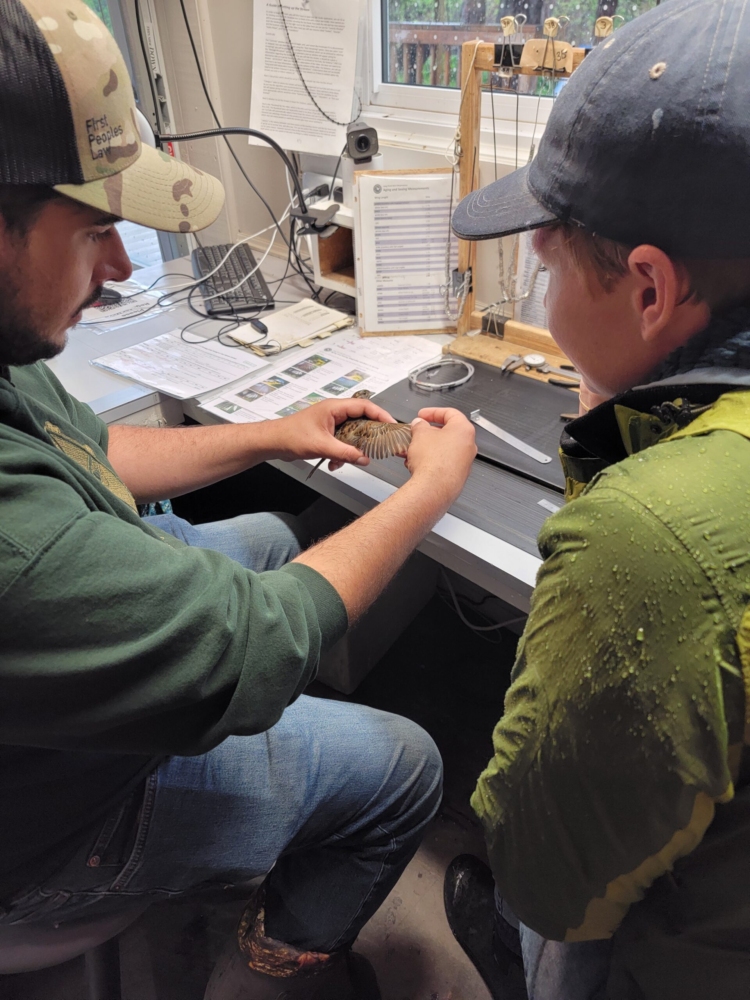
Long-term monitoring of Tree Swallows at Birds Canada’s Long Point Bird Observatory (LPBO) is one of the most valuable datasets on breeding songbirds in the world, and certainly one of the longest-running studies on the species globally. The monitoring of Tree Swallows at Long Point originally began in 1973 under the direction of Drs David Hussell and Geoff Holroyd. The project has engaged more than 200 volunteers, Birds Canada staff, and numerous graduate students and postdoctoral researchers who have monitored approximately 200 nest boxes, collecting valuable data on reproductive success, survival, physical condition, and food availability.  

Photo: Matthew Fuirst

For many bird species, including Tree Swallows, it is most beneficial if their migration and breeding activities are timed to coincide with insect emergence— typically adults breed and chicks hatch during peak insect season when there’s lots of food. However, under a changing climate, this perfect timing doesn’t happen as often. In fact, a recent study using long-term data from LPBO demonstrated that Tree Swallows are breeding earlier as temperatures warm over time. Additionally, insect abundance is peaking earlier each year, so when birds return from migration, the buffet isn’t as full as it could be

But what happens when the buffet has budget cuts? When there’s less food overall?  

That’s the reality for Tree Swallows – reported in a recent ground-breaking publication in the Proceedings of the National Academy of Sciences. The study uses 55 years of Long Point’s monitoring data to examine how Tree Swallows have been impacted by insect loss. 

The study demonstrated that years of low insect abundance led to smaller nestlings and adults.  Not only is it challenging for Tree Swallows to time their breeding activities with insect emergence, but now there are also fewer insects and it’s resulting in malnutrition in some birds.  

Even when individuals do time their migration perfectly with insect abundance – the lack of insects means that those individuals don’t get the same benefits they may have had a few decades earlier when insects were more plentiful. Arriving earlier to line up with insects, also means struggling through springtime cold-snaps. It’s a challenging trade-off for Tree Swallows. Arrive earlier, with questionable weather but more insects? Or come later when the weather is more favourable? Either way – there are fewer insects—less food.  

The importance of this study is twofold – firstly it highlights the negative impacts of declining insect biomass on bird populations and secondly, it provides new insights into how aerial insectivores respond to environmental change. Declines in peak insect abundance occurred around the time chemical pesticides started to be widely used. This study is an important step in understanding which chemical pollutants are reducing insect biomass and determining conservation actions to take to slow or reverse this pattern. 

For Tree Swallows, this new knowledge is essential. According to the State of Canada’s Birds, aerial insectivores are under significant decline in Canada, with a 43% loss in population since 1970. This study provides a unique opportunity to understand the mechanics of population decline, and it also provides incentive and urgency for us to act to protect a group of birds that we cherish and admire. 

Help Tree Swallows and Aerial Insectivores by Creating Habitat and Reducing Pesticide Use 

If you’re a property owner, you can create bird-friendly gardens that support native plant and insect communities.  Even small-scale habitats like balcony planters and community gardens make a positive impact for birds and insects. You can also support efforts to conserve and protect nearby natural areas and parks. 

The use of chemical pesticides and herbicides in agriculture, forestry, and homes poses a major threat to insects many bird species rely on. You can help make a positive change by avoiding the use of pesticides and herbicides on your property and when possible, opt for organic products.  

A huge thank you to Brian Weeks, Charlotte Probst, and the researchers from University of Michigan who published this work and to the hundreds of volunteers who made this work possible.  

This research and these important findings are simply not possible without long-term data and a commitment to long-term monitoring which is incredibly hard to fund, and requires a massive team effort. 

LPBO is the founding program of Birds Canada and if you want to become a volunteer at LPBO and contribute to meaningful long-term datasets, you can email lpbo@birdscanada.org. You can also support LPBO through a donation that supports our research, conservation, and outreach.  

Stay in touch with Birds Canada

Copy link
Powered by Social Snap