Why does this habitat matter so much?
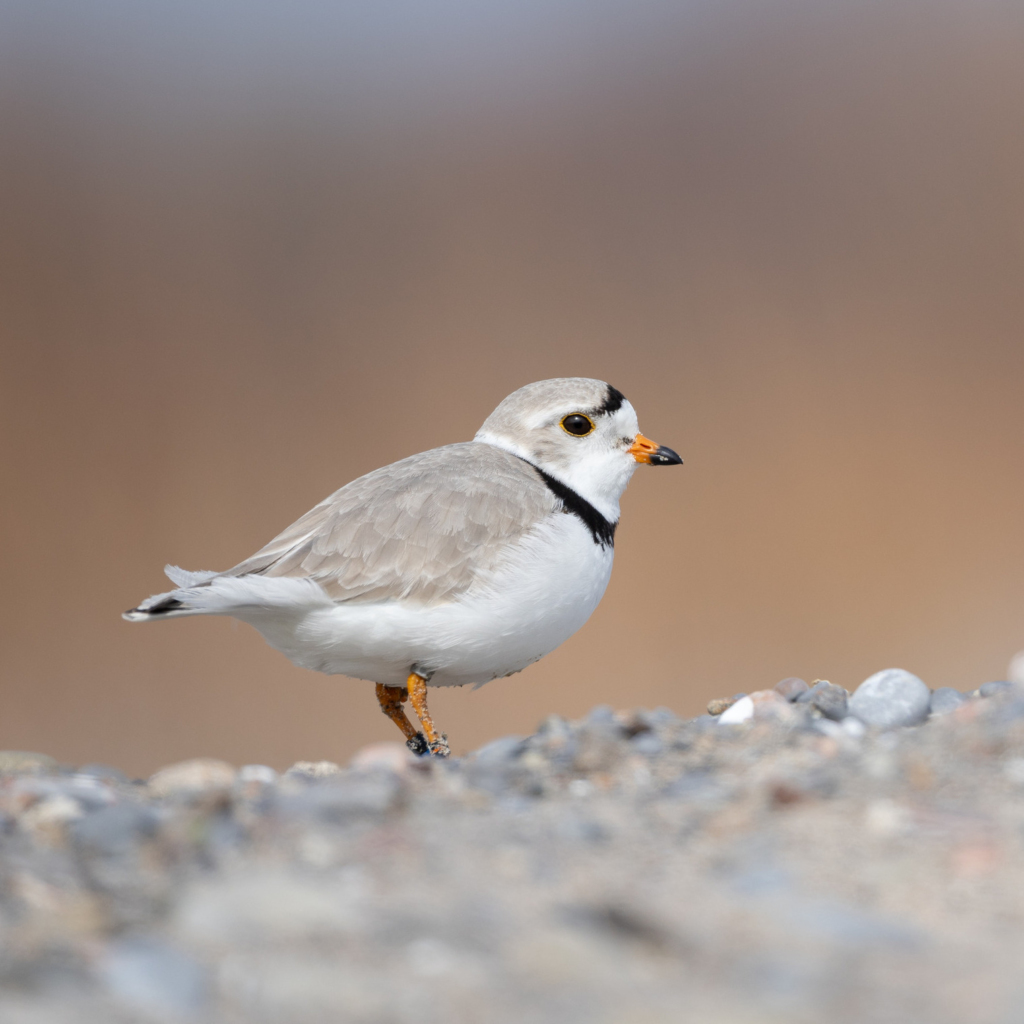
Piping Plovers returned to breed on the shores of Ontario’s Great Lakes in 2007 after a 30-year absence, thanks largely to major conservation efforts in the United States. It was a celebratory moment– a sign that this struggling endangered species was starting to recover.
Habitats like the ones Piping Plovers nest at in Wasaga Beach are increasingly rare. Piping Plovers make their homes on wide sandy beaches with a mix of vegetation, pebbles, driftwood and dunes. When these natural beaches are mismanaged, it leaves Piping Plovers without a place to raise their young, and can take decades and millions of dollars to properly restore.
Under the management and protection of Ontario Parks, Wasaga Beach has hosted 57 nests and successfully raised 87 fledglings. It is the most productive and valuable nesting habitat in the province, and one of few accessible and reliable sites for visitors to see Piping Plovers in Ontario. Beach goers have an opportunity to see an endangered bird, and birding tourists travel from far and wide to experience the joy of adding Piping Plovers to their “life-list”, and watching them raise their young on the beach.
What does the future hold?
Piping Plovers and tourism have co-existed at Wasaga Beach Provincial Park for 18 years. With the support of stewardship programs, millions of visitors enjoy the beach every year while Piping Plovers are raising their young. This has been a true conservation success story that doesn’t have to end now.
Birds Canada is committed to continued conservation efforts for Piping Plover at Wasaga Beach. If the land transfer goes through, the responsibility falls to the Town of Wasaga Beach to ensure this success story continues. In a meeting Birds Canada had with the Town, town officials indicated they want to see both plovers and people thrive and see themselves as environmental leaders - but Birds Canada knows from experience that Piping Plover conservation is no small feat and support from the Province will be needed.
Piping Plovers must be meaningfully integrated into the beach management plan at Wasaga Beach. Currently, the only condition proposed in the land transfer is that the beach remains public. If the transfer goes ahead, we ask the Province to include conditions or commitments that help support Piping Plover conservation and habitat protection.
Take action now
Let the Ontario government know that you are concerned about the protection and management of important Piping Plover habitat at Wasaga Beach. We have the opportunity to influence change, with comments open until August 11th (comment period now closed).
When leaving a comment, Birds Canada suggests you express in your own words that you are concerned about the future of Piping Plovers at Wasaga beach and want an outcome that continues to conserve the plovers.
Consider including the points below and adding your own thoughts and opinions.
The Ontario Government must ensure that Piping Plovers are conserved and protected by a science-based management plan and resources that:
- Reduces threats to Piping Plover and their habitat year-round by restricting mechanical raking so that the habitat is not destroyed, prohibiting dune alteration, and protecting nests with fenced buffer zones and natural predator mitigations.
- Commits funding to protect, conserve, and steward Piping Plovers, their nests, and their habitats.
- Engages experts like Birds Canada at development and implementation phases.
Birds Canada is a national charitable organization dedicated to bird conservation. We have been leading the Ontario Piping Plover Conservation Program since 2018, collaborating with partners at each nesting beach. As program leads, we ensure that on-the-ground conservation and monitoring efforts follow scientific guidelines that are in use across Great Lakes nesting beaches. Additionally, we support volunteer programs and outreach and engagement at Piping Plover beaches.
For questions or inquiries please contact: ontarioplovers@birdscanada.org