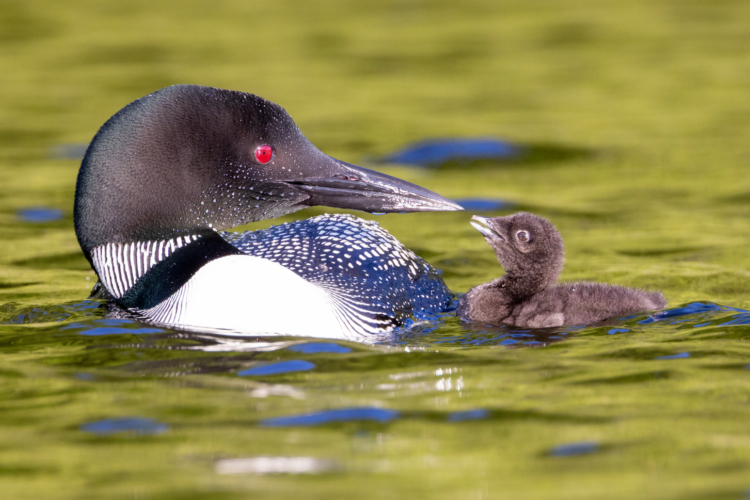
New Common Loon research uncovers a widespread decline and calls for action
The unprecedented international effort to understand and reverse declines in one of North America’s most iconic waterbirds.
Orioles are so much fun to attract to your backyard with their bright colours, beautiful song, and sock-like nests. Follow these simple steps for attracting and feeding orioles while creating a safe environment for them.
Provide fruit: Orioles seek out ripe dark coloured fruit and enjoy sugary treats. Try offering oranges cut in half. Orange halves can be provided in a shallow dish with water to discourage ants. Make sure to change your orange halves regularly as they dry out quickly and can grow mold which is harmful to birds.
Choose an oriole feeder: A top choice should include a feature that is orange or red in colour and can hold nectar, or oranges. Orioles will also use hummingbird feeders for nectar if the ports are large enough, and some have flowers you can pop out to make large openings. Make sure your feeder is easy to open and clean. Glass feeders are recommended because soft plastic can break down in the heat.
Make your own nectar: Use this easy recipe for hummingbirds and orioles: one part granulated white sugar to four parts non-distilled drinking water. Heat the water if necessary to dissolve the sugar. There is no need to boil safe drinking water.
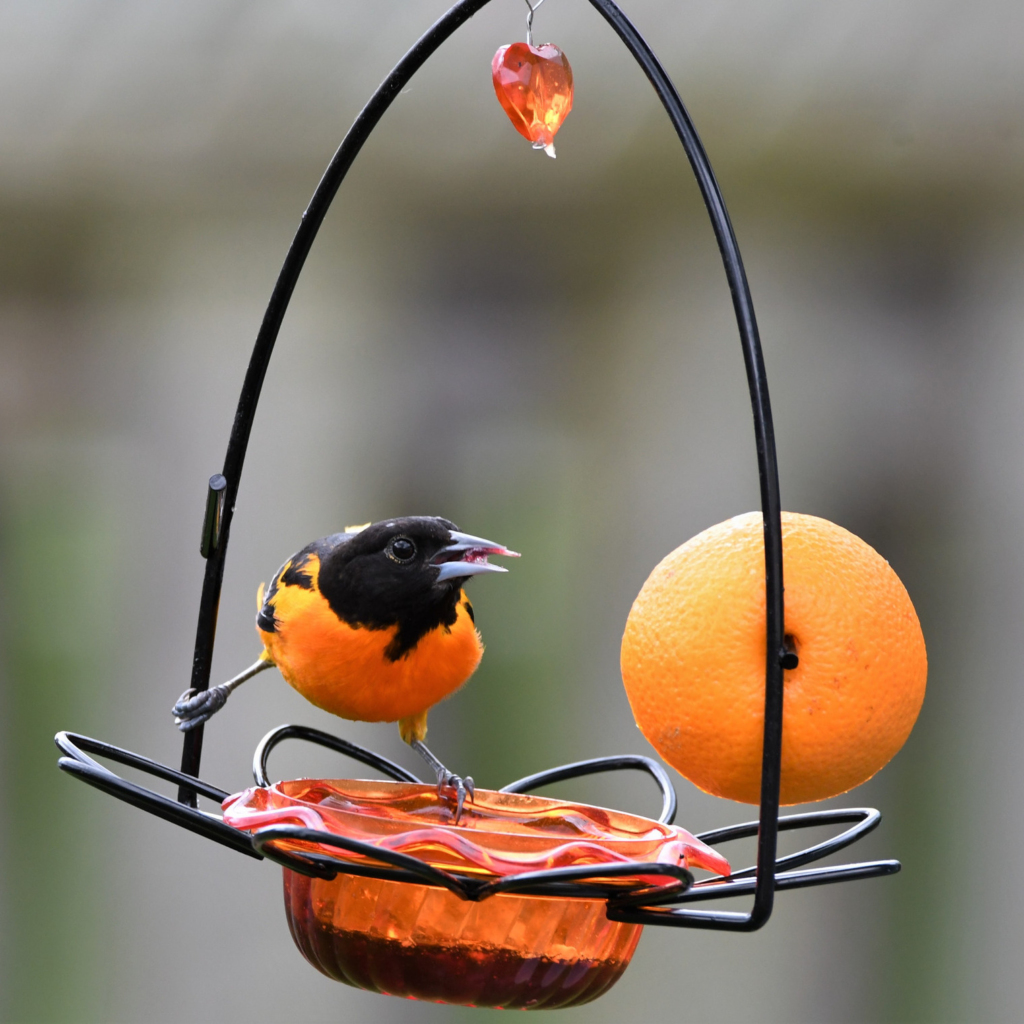
©Baltimore OriolePhoto: Rick Parent
Change your nectar regularly: Scrub feeders with hot water and a clean bottle brush and refill every three days – and more often if it’s hot out. If you see any sign of cloudy water or mould, discard and clean immediately. Always rinse feeders in hot or boiling water before adding fresh sugar water. At least once a month, and immediately if you see black mould, soak your feeder in a mild vinegar solution for at least an hour and scrub with a clean bottle brush, then thoroughly rinse and dry.
Provide mealworms in summer: Orioles change their diet when they are nesting to insects and often stop coming to feeders. At this time, you can try offering mealworms in an open dish. This will provide more protein and nutritional value.
Attract orioles to your backyard: Plant native plants to attract orioles and provide natural food. Plants like black cherry, blueberry, serviceberry, red mulberry, raspberries, and blackberries are attractive options for orioles because of their darkly coloured fruits. Visit birdgardens.ca to learn which plant species grow well in your area and to find local nurseries that supply them.
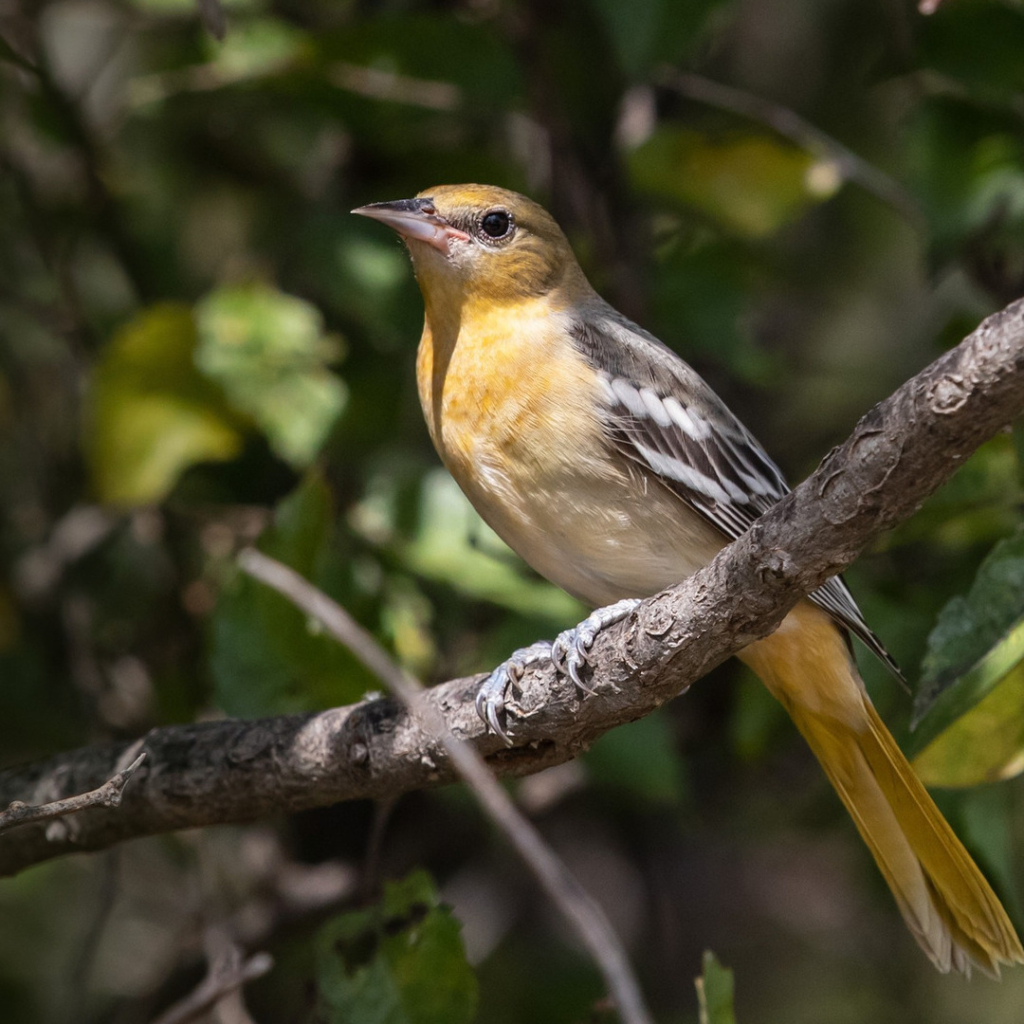
©Bullock's OriolePhoto: Bob Friedrichs
Select the best placement: Place feeders in a quiet area where they are easy to see and convenient to refill. Place feeders close to natural cover, such as trees or shrubs to provide refuge to birds as they wait their turn to feed. Orioles prefer feeders near trees and shrubs where they can rest and observe their surroundings. Set feeders in the coolest of areas, protected from the wind. Make sure your feeder is safe from cats and other predators. You can also help prevent window strikes by breaking up reflections birds perceive as a pathway through your home by learning how to make windows safer for birds on our website.
When to put up and take down feeders: Set up and fill your oriole feeder about a week before the first one arrives. Males typically arrive a few days before females and begin claiming territories. Orioles typically arrive at my house in Long Point, Ontario, around May 1. To estimate the arrival dates of orioles in your area, consult the Bar Charts on eBird.ca. Select your province or territory, then select your county – then click ‘continue’. Scroll down or, if you’re on a computer, search for “oriole” using the Control+F or Command+F function to see when orioles arrive in your area. In the fall (migration starts in August), you can help late migrants by waiting until you haven’t seen an oriole in a few weeks before taking them down.
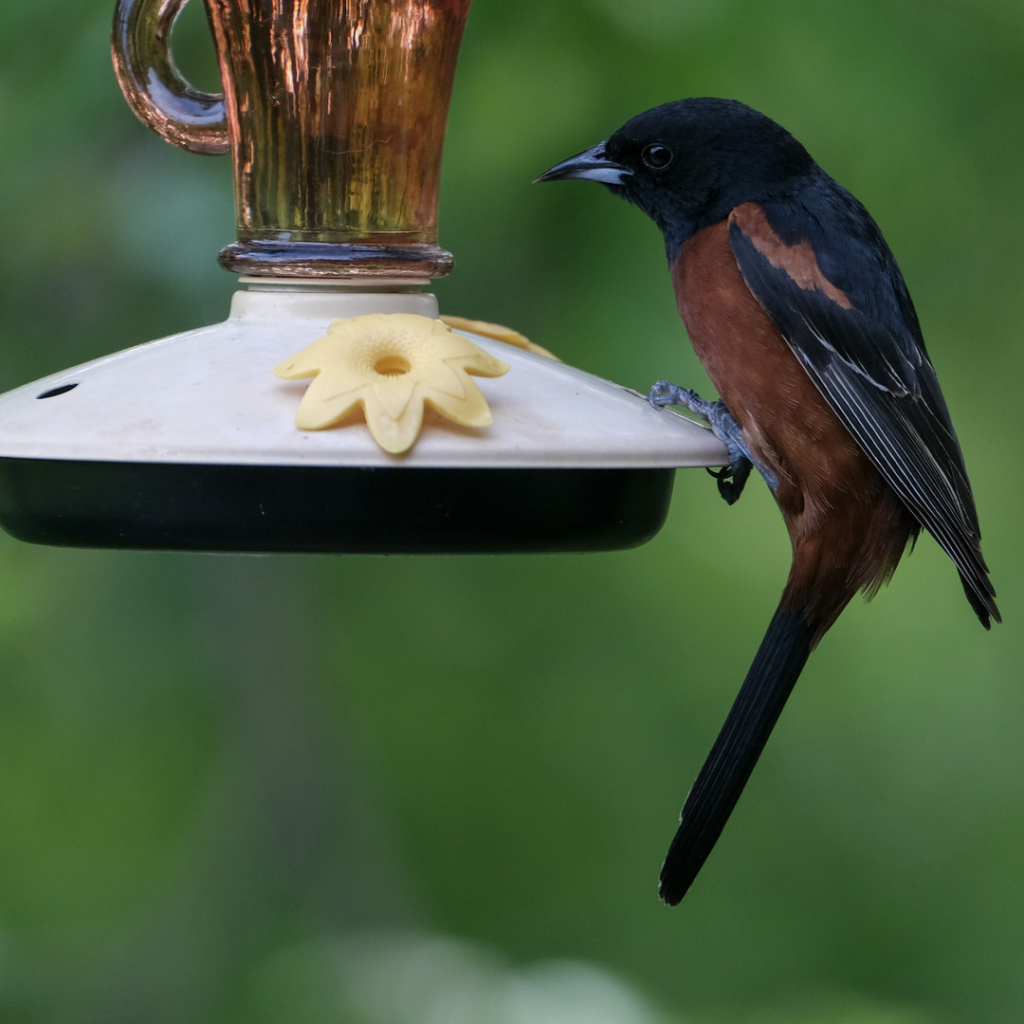
©Orchard OriolePhoto: Kerrie Wilcox
Kerrie started her career at Birds Canada in 1999 when she worked on Phragmites mapping with Long Point Waterfowl. Kerrie took on the coordination of Project FeederWatch in 2006, and the Great Backyard Bird Count in 2010, and also worked for several years as executive assistant for the president and the board of directors. After 25 years with Birds Canada, Kerrie Wilcox has decided to move on and start a new chapter.
My work at Birds Canada involves planning and executing events and coordinating and managing Project FeederWatch in Canada. It is exciting to be working with a team, and partners across Canada, that are passionate about urban natural environments, and making connections with wildlife accessible for all.
Sign up for Birds Canada’s newsletter to receive the latest stories, science, conservation news, and opportunities to get involved.
The unprecedented international effort to understand and reverse declines in one of North America’s most iconic waterbirds.
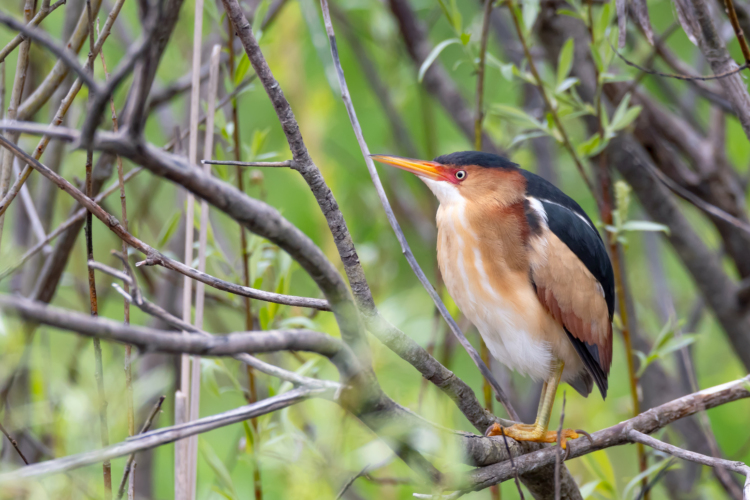
Birds Canada science has helped attract millions of dollars in recent funding to restore hundreds of hectares of threatened Great Lakes coastal wetlands for birds. Read on to see how data from our Great Lakes Marsh Monitoring Program and science-based recommendations from our Long Point Waterfowl and Wetlands Research Program have been critical for making this happen.
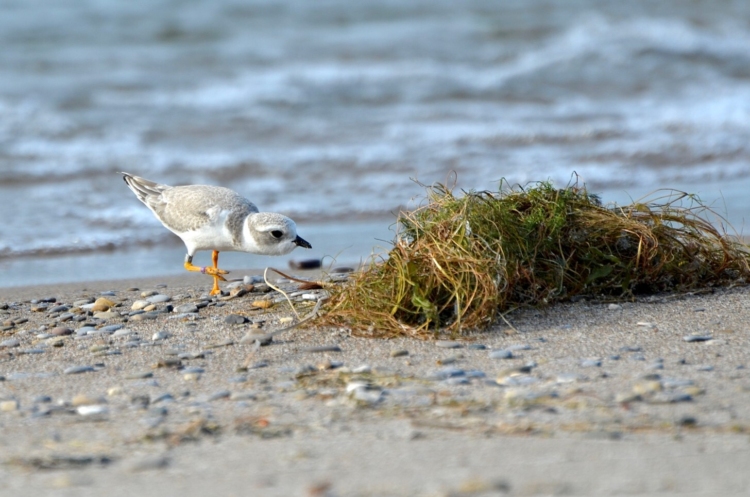
More than a century of conservation efforts paid off this spring, when a pair of Piping Plovers established a nest at Long Point for the first time since 1977. For nearly 50 years, birders, scientists, and nature lovers have eagerly awaited the return of nesting Piping Plovers to the Canadian shores of Lake Erie. Read on to learn just how significant this return is, and why it gives us hope for the future.