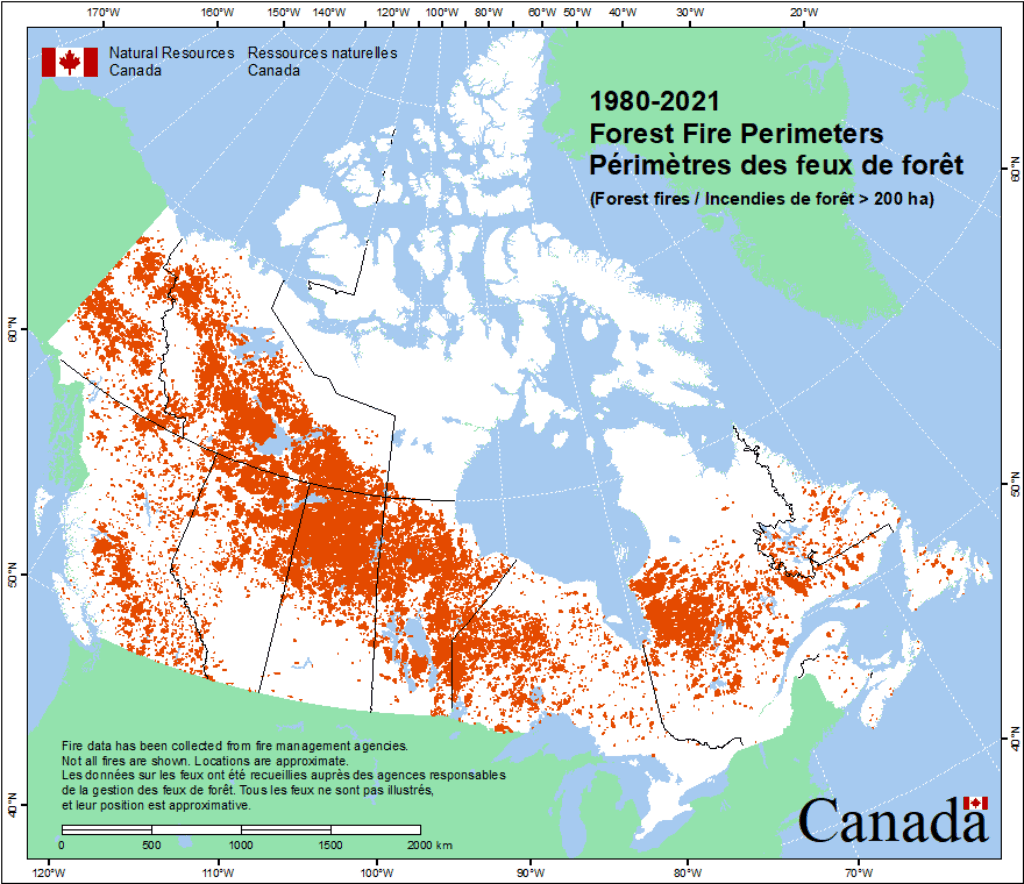
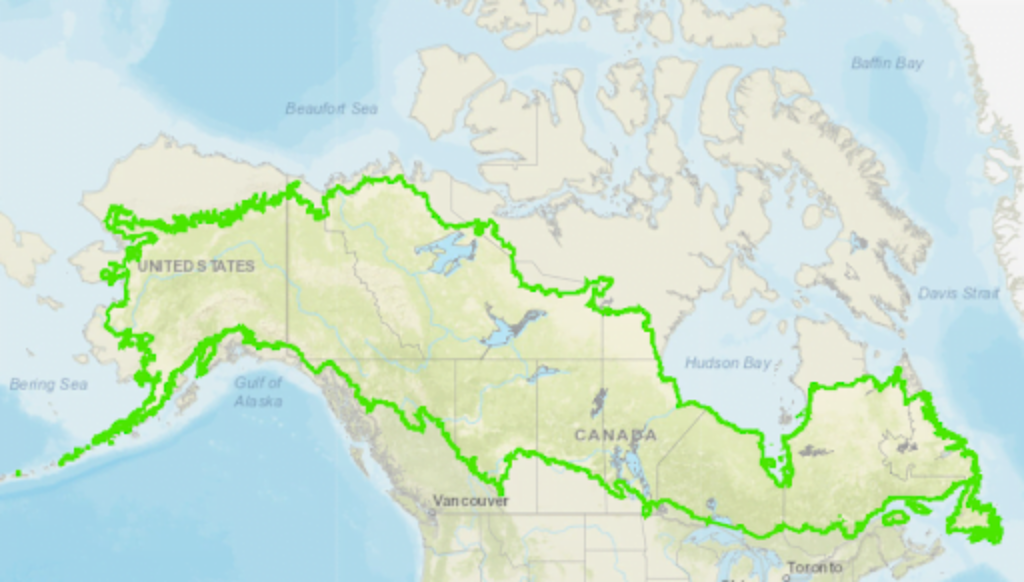
Increased fire frequency, severity, and extent are where the problems lie for Boreal bird species.
Frequent fires in the same areas mean forests do not have time to reach the mature stages that some species prefer, like the Cape May Warbler, Brown Creeper, and Canada Warbler. More severe fires may also burn through the organic matter on the ground, making regeneration take much longer before young or scrub forest species can move in. While some species may thrive in a post-fire landscape, all species face challenges when burns occur, including the losses of nests, and young, as well as displacement, harm, and even death of adults. Questions about the population-level impacts of increasingly extensive wildfires are only just beginning to be addressed.
Depending on the time of year, fires can impact birds in additional and different ways. Spring migrating birds may encounter early summer fires and choose their migration path and breeding territory to avoid active fires and smoke. Mid-summer fires may trap breeding birds that are committed to their nests (some adults may not survive fast-moving fires), some may abandon their nest and attempt to renest in a new location, or abandon breeding attempts entirely and migrate early. Fall migrating birds encountering fire or smoke may also be forced to alter their routes or behaviours to make it back south. Recent studies have provided some insight into the challenges these southward migrating species face: significantly altered paths that cause weight loss and mortality from protracted flight, starvation either from protracted flight or inadequate refueling before migration and potentially even direct impacts from breathing smoke while migrating.
Knowing how you can help in the face of forest fires and widespread declines in Boreal bird species can be daunting. However, these issues are tied to issues like climate change and habitat loss, so many common actions can help. We urge you to advocate for climate actions on local and federal levels. The sad reality for many Boreal species is that they are facing not just the wildfires, but also the loss of insects, habitat loss in their non-breeding range, and threats faced along their migratory routes. While many of these issues feel out of our control, you can make a difference close to home. In addition to advocating for climate action, help us collect strong data to guide conservation efforts and try creating safer migratory routes where you live: create native habitat in your yard or community areas, reduce window collisions, and keep cats indoors. These smaller actions do matter.
Birds Canada is expanding and concentrating our efforts on Boreal and Arctic conservation work through our Science in the North program, with goals of supporting monitoring, using data towards conservation efforts, and growing Northern capacity, all following Indigenous and Northern community interests.