Birds Canada-Western Partnership
Powering the science birds and nature need to thrive.
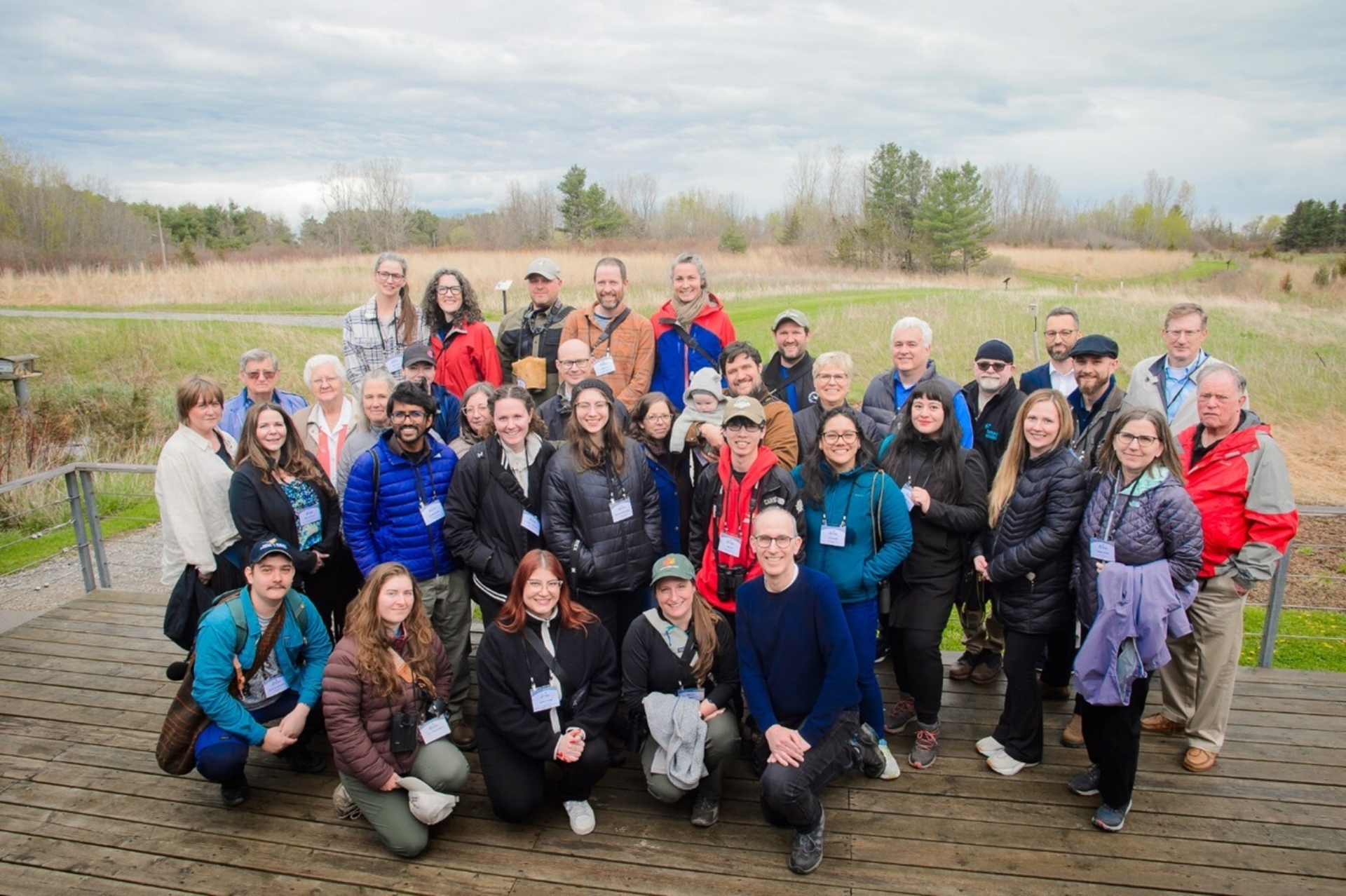
Photo: Christopher Kindratsky/Western Communications
Photo: Christopher Kindratsky/Western Communications
1 May, 2026 | Media Release
Renewed MOU continues shaping migration science nationally and internationally
Protecting birds starts with knowledge. Understanding where they move, when they travel, and how they use the landscapes that we share, is one of the first steps to helping them thrive. This can’t happen in isolation. Across Canada, there’s a growing commitment to better understand and help birds.
The urgency is real. Across North America, bird populations have declined by nearly one-third since 1970. Meanwhile, Canada is accelerating major energy and infrastructure developments – decisions that will shape landscapes for generations.
That’s where our collaboration between Birds Canada and Western University comes in. Together we are building knowledge and tools to protect birds in our rapidly changing world.
On April 30, staff, faculty, and leadership from Birds Canada and Western gathered at Birds Canada and the Long Point Bird Observatory in Port Rowan, Ontario, to celebrate a renewed partnership, and showcase the strength of collaboration.
The agreement formalizes a long-standing relationship between Western researchers and one of Canada’s largest conservation organizations and creates new opportunities for collaborative research, student training, technological innovation and major funding partnerships.
Building the science, the systems behind it – and preparing future generations
At the centre of this effort is Birds Canada’s Motus Wildlife Tracking System which has been developed in partnership with Western University, other Canadian institutions and collaborators around the world.
Motus is an international collaborative research network that uses automated radio telemetry to track the movement and behaviour of small animals, like birds, bats, and insects. Motus has grown into a global platform supporting thousands of projects across more than 30 countries – generating critical information about how birds move and interact with their environments.
“We want to understand how different species move across landscapes, especially species at risk,” said Chris Guglielmo, professor of biology and director of Centre for Animals on the Move. “The better we understand those movements, the better we can protect them.”
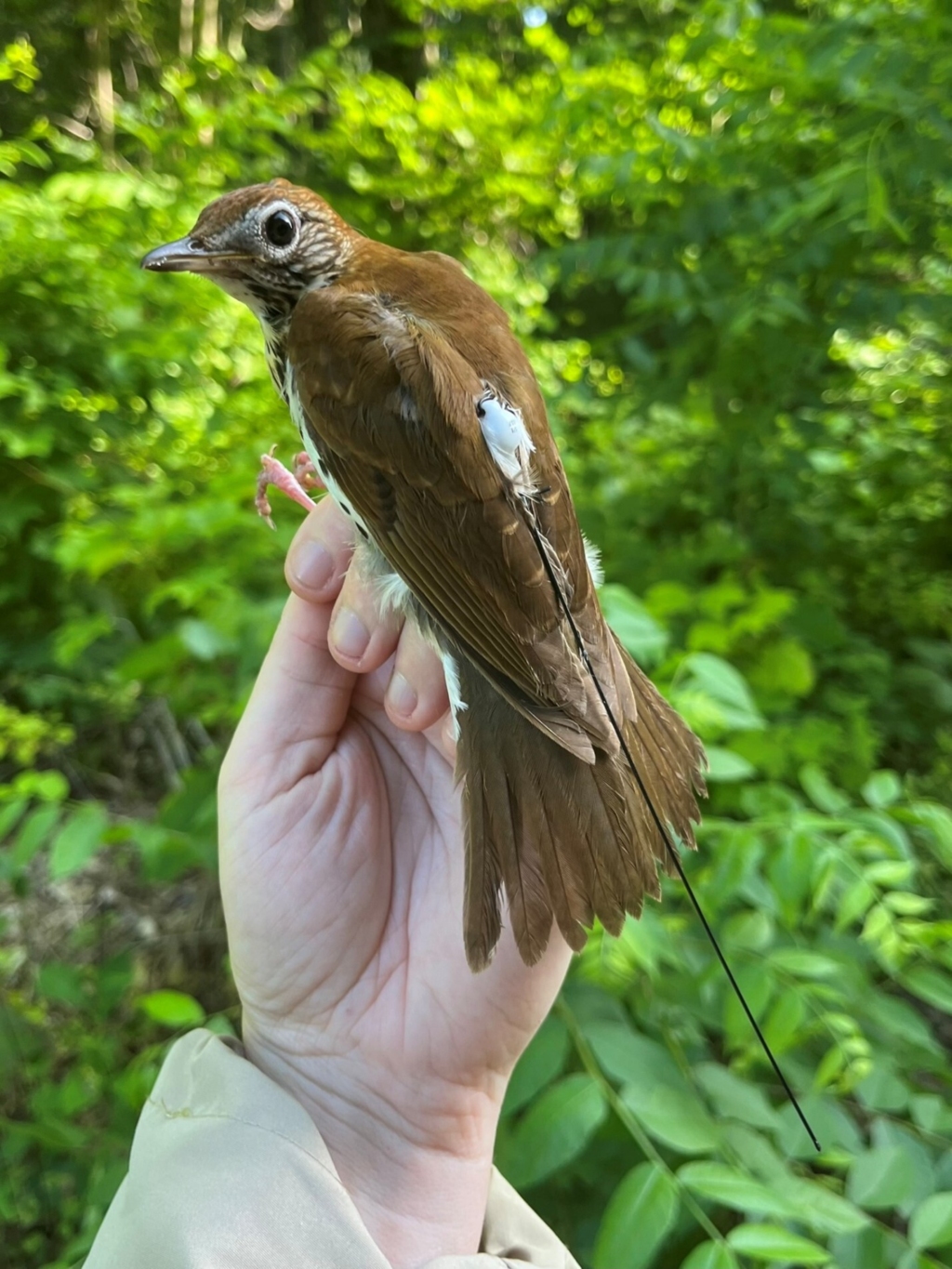
©Wood ThrushPhotographer: Emma Buck
While Motus has global reach, it is grounded in a place that has made this work possible: Long Point, Ontario.
Long Point region is among the most biodiverse in Canada – a critically important place for migratory birds and home to the Long Point Bird Observatory, the founding program of Birds Canada.
“For decades, Long Point has served as a world-renowned hub for research, education, and training students and early-career researchers.” Said Stu Mackenzie, Director of Strategic Assets at Birds Canada. “Through our partnership with Western, our facilities and programming at Long Point support a living laboratory advancing globally significant conservation science. Programs like LPBO’s Doug Tarry Young Ornithologists’ Workshop is working to inspire and train future scientists, many of whom continue their studies at Western University and other institutions across Canada. From hands-on field experience at Long Point to advanced research in laboratories and data science – Birds Canada and Western University are stronger together and are shaping the next generation of conservation leaders.
The April visit to Long Point was a celebration, but it was also a signal. A signal that Canada has the expertise, partnerships, and infrastructure needed to lead in conservation science and tackle global conservation challenges.
“It’s exciting to see what’s possible when researchers and organizations come together around a shared purpose,” said David Muir, associate vice‑president of innovation and strategic partnerships. “Partnerships like this bring together complementary strengths and create opportunities for collaborative research that generate meaningful scientific and conservation impact.”
“Together, we’re powering the science that birds and nature need to thrive,” said Patrick Nadeau, president and CEO of Birds Canada. “This agreement creates a strong synergy by combining Birds Canada’s national leadership in bird science and conservation with Western’s research expertise to create knowledge that informs policy and helps protect birds and biodiversity for future generations.”
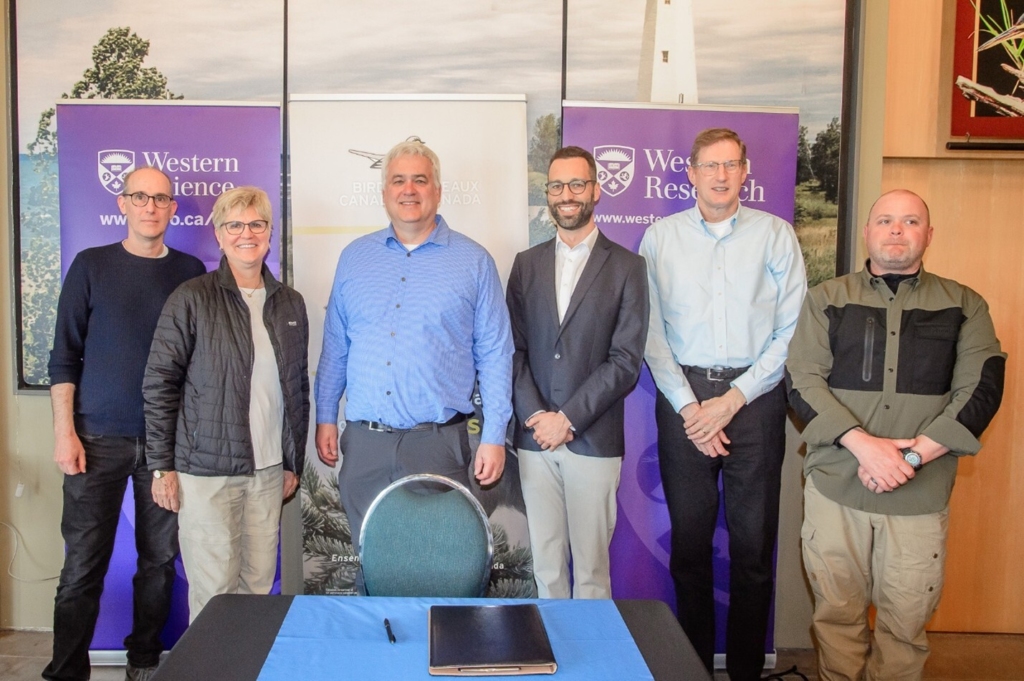
Photo: Christopher Kindratsky/Western Communications
Chris Guglielmo Director, Centre for Animals on the Move, Western University, Christine Lengvari, Director, Birds Canada Board of Directors, Matt Davison, dean of Western’s Faculty of Science, Birds Canada CEO Patrick Nadeau, Dave Muir, Western’s associate vice-president (innovation and strategic partnerships), and Stu Mackenzie, Birds Canada, Director of Strategic Assets.
Stay Connected with Birds Canada
Sign up for Birds Canada’s newsletter to receive the latest stories, science, conservation news, and opportunities to get involved.
Discover More Articles Like This

Celebrating the Joy of Birds and the Community that helps them Thrive
Government of Canada invests $2.6 million in bird monitoring – bolstering the impact of our volunteers

Birds Canada and Audubon renew partnership on annual Christmas Bird Count
For well over a century, the Christmas Bird Count (CBC) has connected people with birds and nature while establishing one of the longest running wildlife datasets in the world. A renewed partnership agreement between National Audubon Society (Audubon) and Birds Canada reaffirms a shared commitment to this international collaboration, more than 125 years in the making.