
Blog / eNews

Celebrating a Champion of B.C.’s Fraser River Delta
On August 27, Bird Studies Canada Board member Anne Murray of Delta, British Columbia, received a Canada 150 commemorative pin in recognition of her contributions to environmental stewardship of the Fraser River Delta.
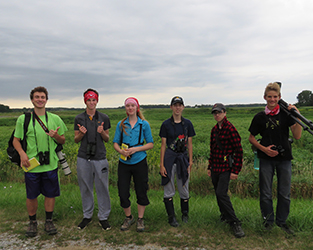
Congratulations, Young Ornithologists!
Bird Studies Canada and the Long Point Bird Observatory welcomed six enthusiastic young naturalists to our 2017 Doug Tarry Young Ornithologists’ Workshop. This year’s participants were: Logan Lalonde (Kelowna, BC), Nathan Hood (Cambridge, ON), Alessandra Wilcox (Burlington, ON), Madelaine Davies (Thorold, ON), Owen Ridgen (Toronto, ON), and Josiah Van Egmond (Winnipeg, MB).
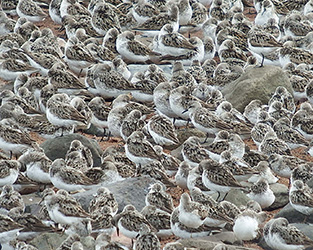
Giving Shorebirds More “Space to Roost” in Nova Scotia’s Minas Basin
In late summer, hundreds of thousands of shorebirds stop over in the Bay of Fundy’s Minas Basin, in Nova Scotia, during their remarkable migration to South America. They require access to beaches and other coastal sites where they can rest when mudflat foraging habitat is covered during high tide.
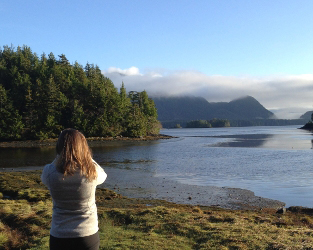
Volunteers Needed for Coastal Surveys in British Columbia
On September 10, Bird Studies Canada will celebrate the start of the 19th season of our British Columbia Coastal Waterbird Survey. This long-term Citizen Science monitoring program involves counting ducks, loons, grebes, gulls, and other waterbirds on the second Sunday of each month throughout the winter.
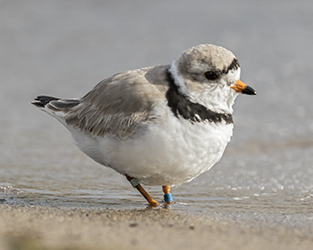
Piping Plovers Hang On in Ontario and Manitoba
Following an absence of breeding pairs in Ontario for more than 30 years, Piping Plovers have been making a gradual return at selected nesting locations on Canadian Great Lakes shores since 2007. Federal and provincial governments and local agencies cooperate to protect these Endangered shorebirds and their habitat.

Return to Baccalieu Island: Monitoring Leach’s Storm-Petrels
Completing my fifth annual pilgrimage to Baccalieu Island, NL, I spent one gloriously sunny week this July assisting Dr. April Hedd, Wildlife Biologist with Environment and Climate Change Canada, in studying Leach’s Storm-Petrels.