5 min read.
By Danielle Ethier, Senior Scientist and Kathy Jones, Volunteer Manager and Biologist, Ontario Programs
Dr. Doug Tozer was honoured with a Conservation Award from Ontario Nature in early December 2025, spotlighting decades of quiet, meticulous work that has transformed how we understand and protect wetlands, and the birds and frogs that depend on them. His story is not just about scientific excellence, but about leadership, mentorship, and a rare gift for making complex science understandable for the public.
A lifetime in wetlands
For more than 30 years, Doug has immersed himself in marshes, bogs, and shorelines, designing and implementing monitoring programs for birds, frogs, and their habitats across the Great Lakes, and beyond. As Director of Waterbirds and Wetlands at Birds Canada, he leads multiple high-profile science-based programs, overseeing more than a thousand volunteers and staff who collect data that can be used to guide conservation action.
Doug’s work is grounded in rigorous field science and advanced analysis of long-term data, including topics like habitat relationships, detection probabilities (how likely you are to find something that is actually there), population trends, and wetland health. This sustained effort has helped identify priority areas for conservation, evaluate restoration success, and track how wetland wildlife is responding to a rapidly changing climate and landscapes.
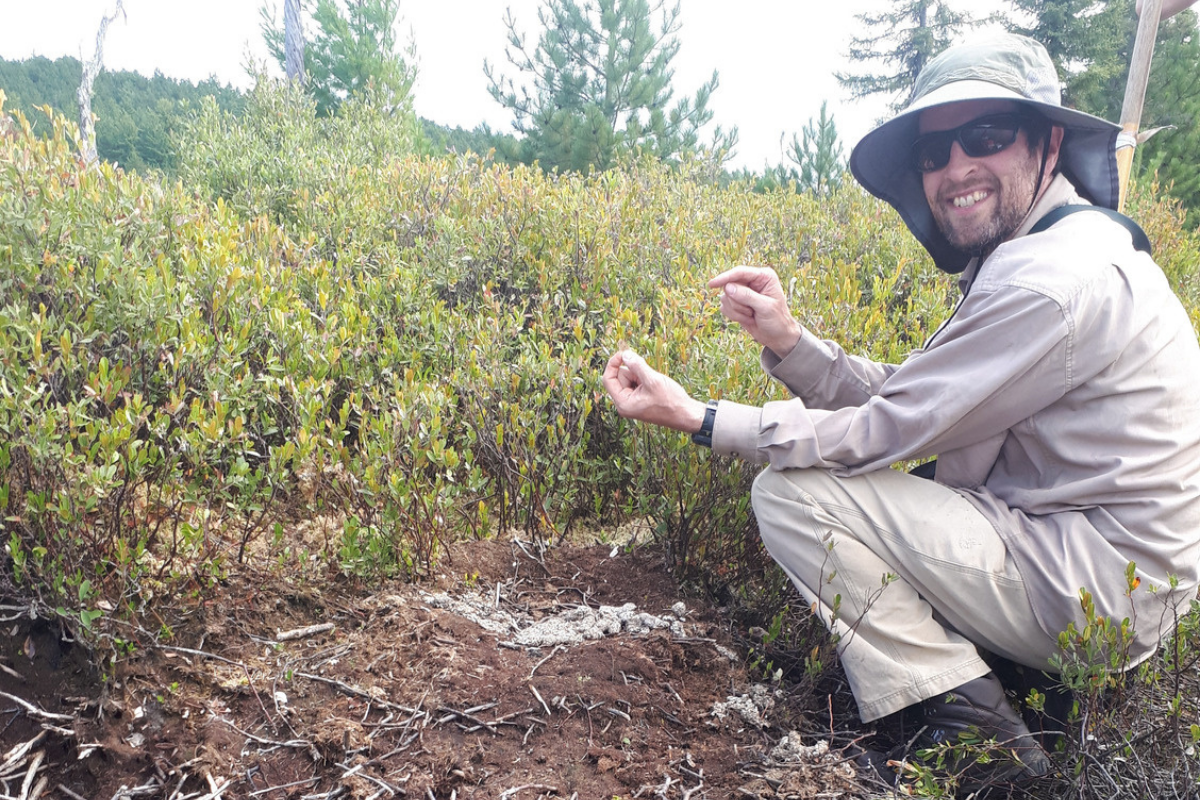
Doug Tozer inspects an old Common Loon nest while assisting Dr. Kristin Bianchini during her post-doctoral research co-supervised by Doug and supported by Birds Canada’s Long Point Waterfowl and Wetlands Research Program. Photo by Kristin Bianchini
Turning data into protection
Doug is a leader on largescale wetland monitoring programs that shape restoration strategies and policy across the Great Lakes region. Much of this impact flows from his leadership of the Great Lakes Marsh Monitoring Program and the Great Lakes Coastal Wetland Monitoring Program, which provide long–term, standardized data that decision makers trust and utilize. His research on marsh–breeding birds in southern Ontario has directly informed best management practices for wetland restoration, benefiting species of conservation concern such as Least Bittern and Black Tern by clarifying what healthy habitat looks like on the ground. Doug has also published influential studies on issues like invasive Phragmites control and the effects of changing water levels, giving wetland managers concrete guidance on how to restore degraded marshes and keep them resilient.
Mentoring the next generation
Conservation leadership is measured not only in papers and policies, but in people, and this is another area where Doug excels. Over his career he has mentored roughly 20 graduate students and postdoctoral fellows, helping them develop the technical skills, scientific curiosity, and sense of responsibility needed to carry waterbird and wetland conservation forward. He also represents Birds Canada on collaborative bodies such as the international Loon and Diver Research Working Group (which he co-chairs) and the Ontario Eastern Habitat Joint Venture Steering Committee, where he works with partners across sectors to align science, funding, and on–the–ground action. It isn’t unusual to see or hear Doug sharing his knowledge with onsite wetland managers – ensuring a direct link between science and conservation. By fostering collaboration and building capacity in others, he ensures that the impact of his work extends far beyond his own projects or publications.
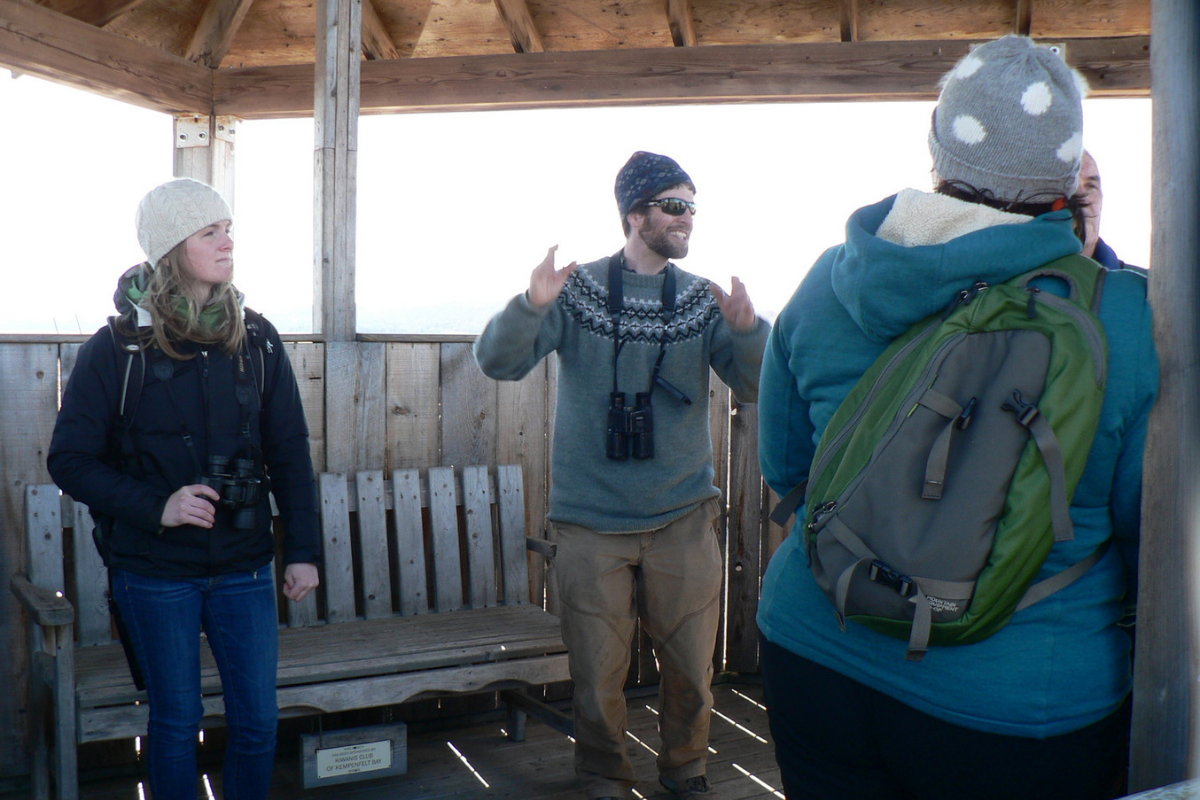
Doug Tozer educating future Marsh Monitors (Wye Marsh). Photo: Kailey Petz
Doug continues to grow his mentoring activities, bringing wetland science to a larger community as he hosts MarshWatch – Great Lakes edition – in 2026. With this project, Doug will share his love of wetlands with those less familiar, introducing beginners and new professionals to marshes and wetland dependant birds and frogs, mentoring their species id skills, and giving them a chance to “wet their feet” on marsh data collection through the NatureCounts app.
Connecting science and people
Doug’s leadership is equally evident in how he shares science with the public. In addition to nearly 60 peer-reviewed publications as well as other reports, he regularly writes popular articles, speaks on podcasts (see “Do birds have feelings?” and “Did a chickadee steal my hotdog?”), and steers documentaries, translating specialized research into compelling stories about loons, marsh birds, and the future of Great Lakes wetlands. Whether speaking at events, contributing to outlets like BirdWatch and Birding Magazine, or acting as an engaging MC with a well–timed pun, he tailors his message to each audience while keeping the core science accurate and clear. That ability to bridge rigorous research and public engagement is a key reason his work has galvanized volunteers, inspired volunteer scientists, and built broader support for wetland conservation and protection.
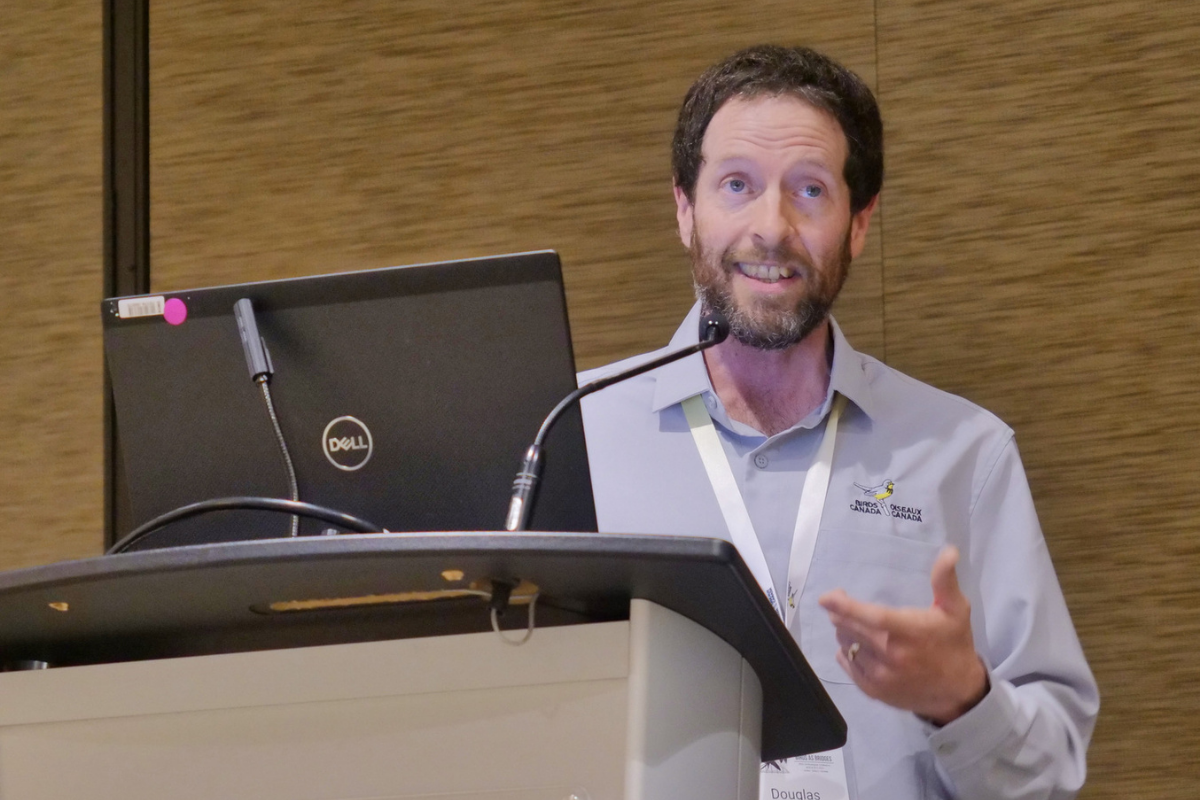
Doug Tozer speaking at a binational conference (SOC / AOC). Photo: Work Cabin Creative
Why this award matters
Ontario Nature’s Conservation Awards celebrate people and organizations whose efforts safeguard wild species and spaces across the province, and Doug’s recognition in 2025 underscores how essential wetlands are to Ontario’s biodiversity. By documenting long-term trends, guiding restoration, and championing evidence-based policy, he has helped ensure that remain vibrant homes for birds, frogs, and countless other species.
Doug’s award is, in many ways, a celebration of the thousands of volunteers, students, and colleagues he has inspired to pull on rubber boots, head into the cattails, and turn data into good conservation decisions. It is also a reminder that thoughtful, sustained, and collaborative science can change the trajectory of entire ecosystems—and that Ontario’s wetlands and those of the rest of the Great Lakes are in far better shape because of Dr. Doug Tozer’s leadership.