A Relationship Taking Flight: Timiskaming First Nation
Strong partnerships are at the heart of effective bird conservation, and the growing relationship between Timiskaming First Nation (TFN) and Birds Canada embodies that spirit.
Evening Grosbeaks are widely distributed in Canada, occurring as far west as the Pacific Coast, north to the Yukon border, and east to the Atlantic Coast. We are currently in the midst of an irruption of this species throughout central and eastern Canada. So, with the Evening Grosbeak fresh in the minds of many Canadians, what better way is there to celebrate and learn about this bird that so captures the imagination than to make it our 2026 Avian Ambassador?
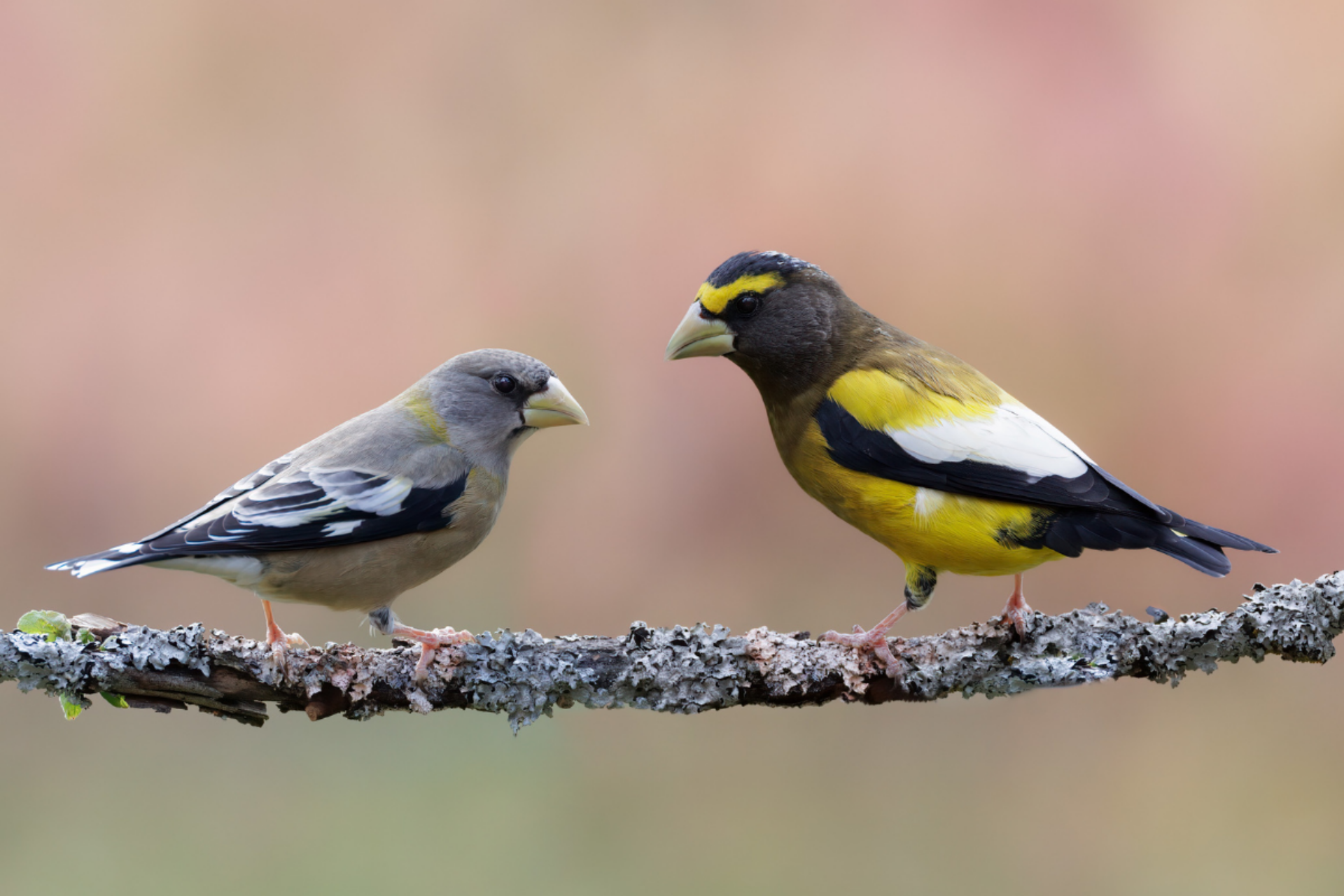
©Evening GrosbeaksPhoto: Missy Mandel
©Evening GrosbeaksPhoto: Missy Mandel
6 min read
Few birds in Canada trigger the same level of excitement and anticipation as the Evening Grosbeak. As a young birder growing up in Peterborough, Ontario, I was keenly aware that flocks of this implausibly striking bird were regular winter visitors to the area – particularly around bird feeders on the Canadian Shield. Their piercing calls, electric plumage, intense expressions and imposing bills all combined for some wonderful drama.
Over the last few decades, we have seen a change in our encounters with Evening Grosbeaks. The regular winter appearances near my home in southern Ontario became less frequent, and birders in southern Manitoba, Quebec and the Maritimes were noticing the same. Irruptions (movements of birds outside of their normal range in search of food) of Evening Grosbeaks began to occur less frequently, only every two, five or even 10 years. The result was a sense of loss, like we were being robbed of something really special. At the time I, and many others who had grown accustomed to the winter arrival of Evening Grosbeak flocks, didn’t really understand what was happening. Why were we seeing fewer Evening Grosbeaks? And why were these winter incursions happening less frequently?
Evening Grosbeaks are widely distributed in Canada, occurring as far west as the Pacific Coast, north to the Yukon border, and east to the Atlantic Coast. We are currently in the midst of an irruption of this species throughout central and eastern Canada. So, with the Evening Grosbeak fresh in the minds of many Canadians, what better way is there to celebrate and learn about this bird that so captures the imagination than to make it our 2026 Avian Ambassador?
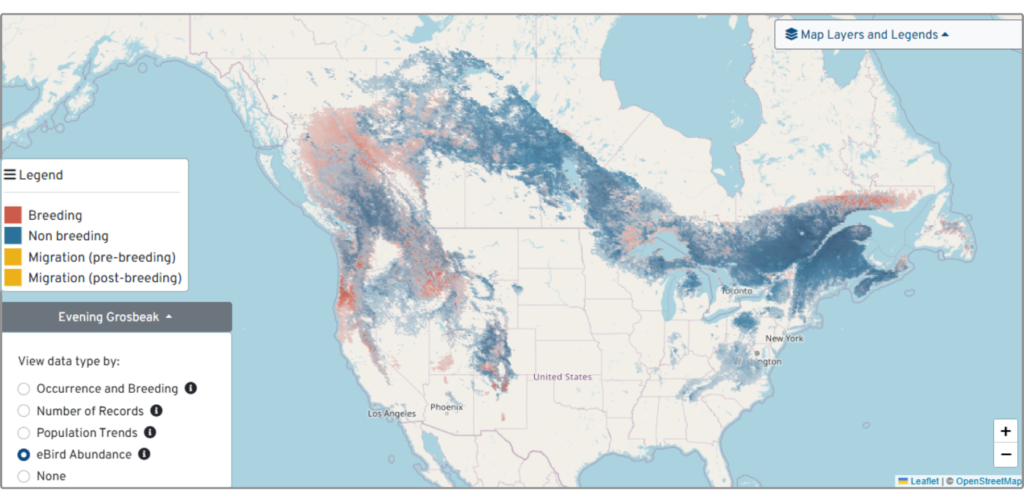
©Range map of the Evening Grosbeak based on eBird abundance.Photo: NatureCounts
So let’s get to know the Evening Grosbeak. For starters, it is a finch, one of the largest in Canada (20 cm long, 60 grams in weight, about the same as a tennis ball), second only to the Pine Grosbeak. It is very distinctive, with the male having a black head, upper back, tail and chest, seamlessly blending into a bright yellow lower back and underparts. The male also has a wide, vibrant yellow eyebrow. Evening Grosbeaks are strongly sexually dimorphic, meaning that male and female birds look nothing alike. And for all the attention male Evening Grosbeaks receive (and deservedly so), the female is equally stunning with glowing silver body feathers accentuated with pale yellow on the nape and upper chest and white spotting on the wings and tail. Both sexes have that characteristically massive conical bill.
In Canada, Evening Grosbeaks live in boreal, montane and northern mixed forests across the country. According to the State of Canada’s Birds, Canada’s population represents roughly two-thirds of the global population, resulting in a high degree of Canadian responsibility. They can also be found in the northeastern US and patchily across the montane region of the western US south to central Mexico. They eat a variety of seeds and fruit during the winter months including Pin Cherries, Manitoba Maple keys and of course sunflower seeds – sometimes by the tonnes at bird feeders! During the breeding season they switch to eating insects with a penchant for caterpillars – particularly the Spruce Budworm during outbreaks.
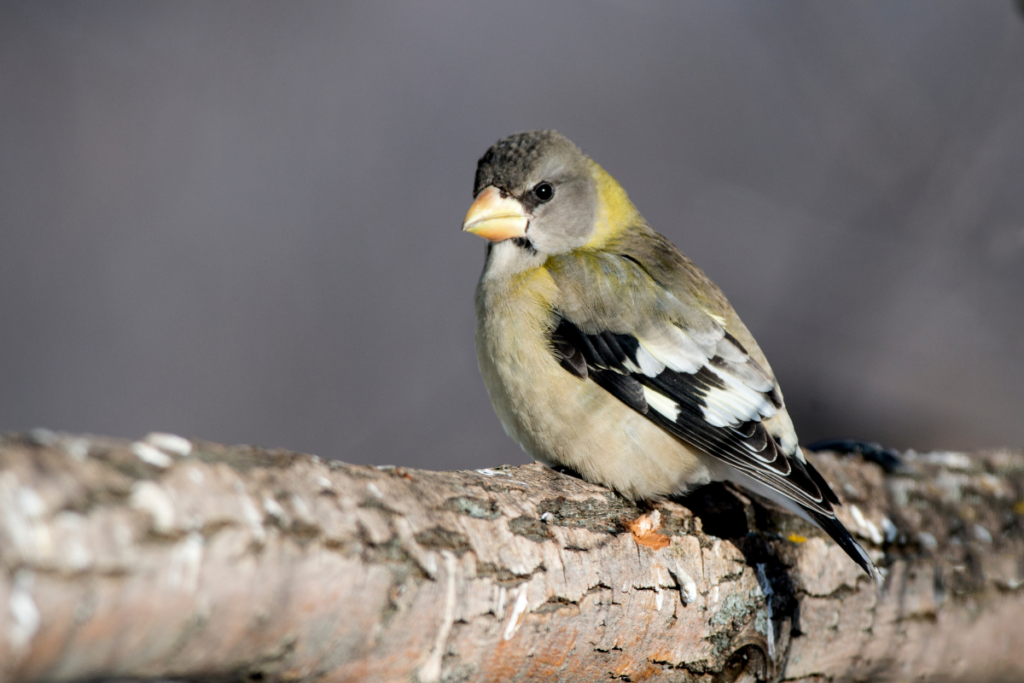
©Female Evening GrosbeakPhoto: May Haga
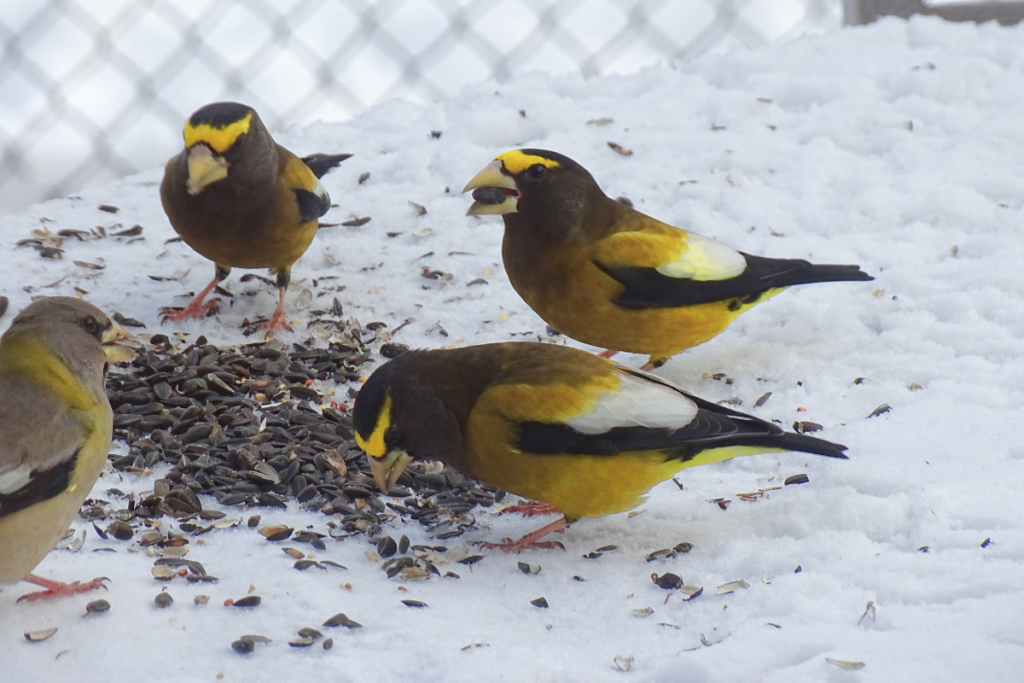
©Evening GrosbeaksPhoto: Graham Sorenson
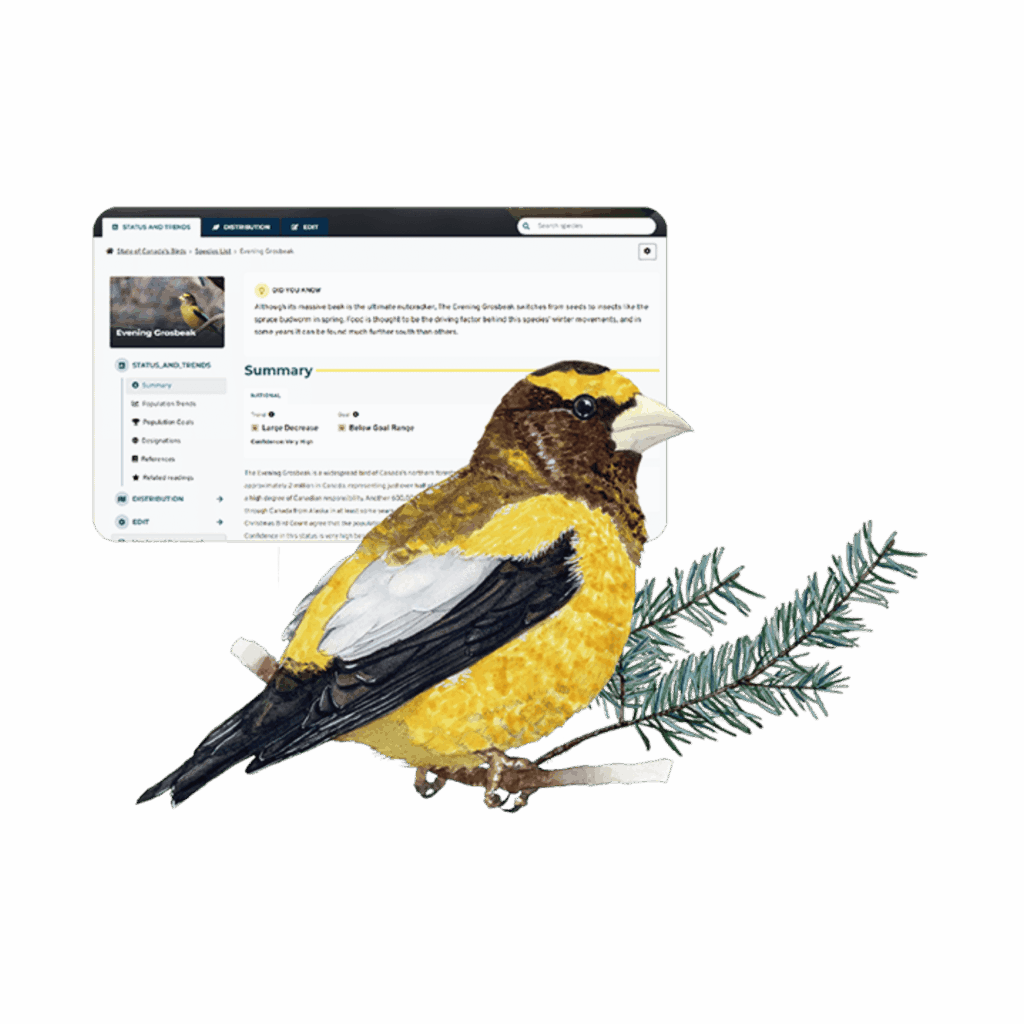
Our State of Canada’s Birds Report, produced with Environment and Climate Change Canada, shows that Canada is home to roughly two-thirds of the world’s Evening Grosbeaks—we have a responsibility for this species.
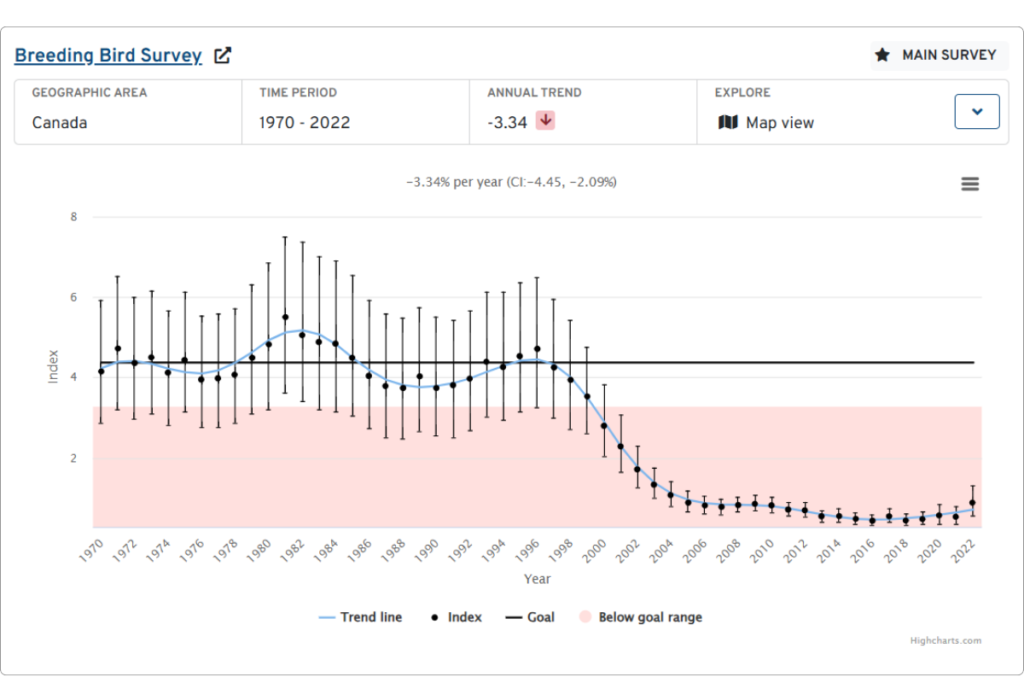
There are several bird monitoring programs where volunteer surveyors are collecting valuable population trend data on this species including Project FeederWatch, the Breeding Bird Survey (BBS) and the Christmas Bird Count (CBC). Overall, there has been a large decrease in Evening Grosbeak populations across Canada since 1970, with BBS data showing an 83% decline and CBC data showing a 94% decline. Interestingly, the BBS trend from 2012 – 2022 is actually showing a stable population trend. Whether this is just a temporary pause in their population decline, or the start of a positive trend, remains to be seen. You can support this species by contributing to monitoring programs like these, with Project Feederwatch on now throughout April.
NatureCounts
Breeding Bird Survey population trend for Evening Grosbeak - NatureCounts
The reasons for their decline are not yet fully understood. Habitat loss and alteration, insect decline (particularly Spruce Budworm population cycles), factors related to climate change and collisions with windows and cars— especially during winter when they are in larger flocks, all may be contributing factors. Evening Grosbeaks are currently listed as a species of Special Concern under the federal Species at Risk Act.
This stunningly plumaged Evening Grosbeak has touched the lives of many birders and feederwatchers across this country. Throughout the year we will be connecting you with stories, conservation work and researchers that are working to better understand this enigmatic finch, so keep your eyes (and ears) peeled to our various channels including BirdWatch Canada, the podcast, and our social media. In the meantime, please share your Evening Grosbeak stories and images with us on social media.
Jody is an avid birder and naturalist who enjoys sharing his enthusiasm for the natural world. He has been birding and banding since his teens, when he began volunteering at Long Point Bird Observatory (LPBO) in Southern Ontario. He is now the Director of Communications at Birds Canada where he manages the organization’s public relations and media, is the co-editor of BirdWatch Canada Magazine, producer of the Warblers Podcast and a coordinator of eBird Canada.
Sign up for Birds Canada’s newsletter to receive the latest stories, science, conservation news, and opportunities to get involved.
Strong partnerships are at the heart of effective bird conservation, and the growing relationship between Timiskaming First Nation (TFN) and Birds Canada embodies that spirit.
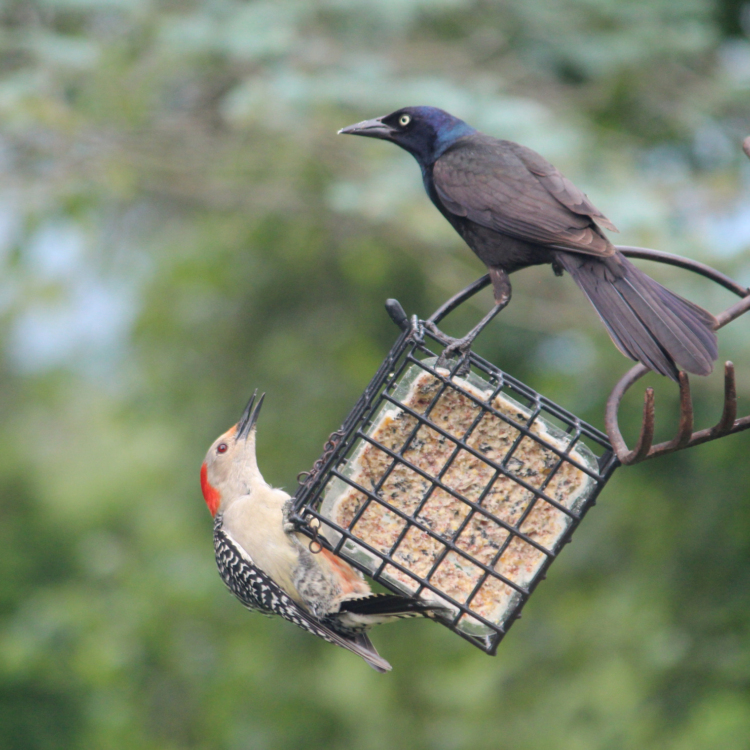
An important part of welcoming birds to your outdoor space is to provide feeders and birdbaths safely. Here are our guidelines.
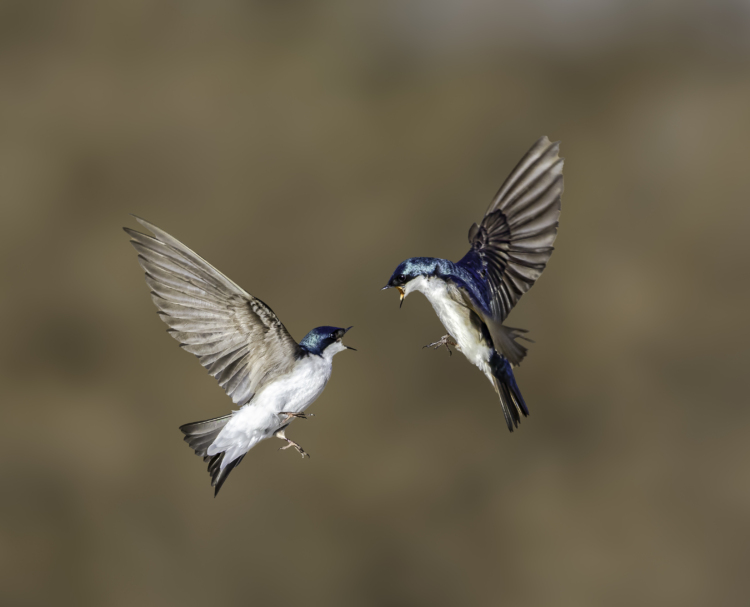
Many bird species time their migration and breeding activities to coincide with insect emergence. However, under a changing climate, this perfect timing doesn’t happen as often. A recent study using long-term data from LPBO demonstrated that Tree Swallows are breeding earlier as temperatures warm over time.