Long Point Bird Observatory

CMMN Status: Full Member

Affiliation: Long Point Bird Observatory is a program of Bird Studies Canada.

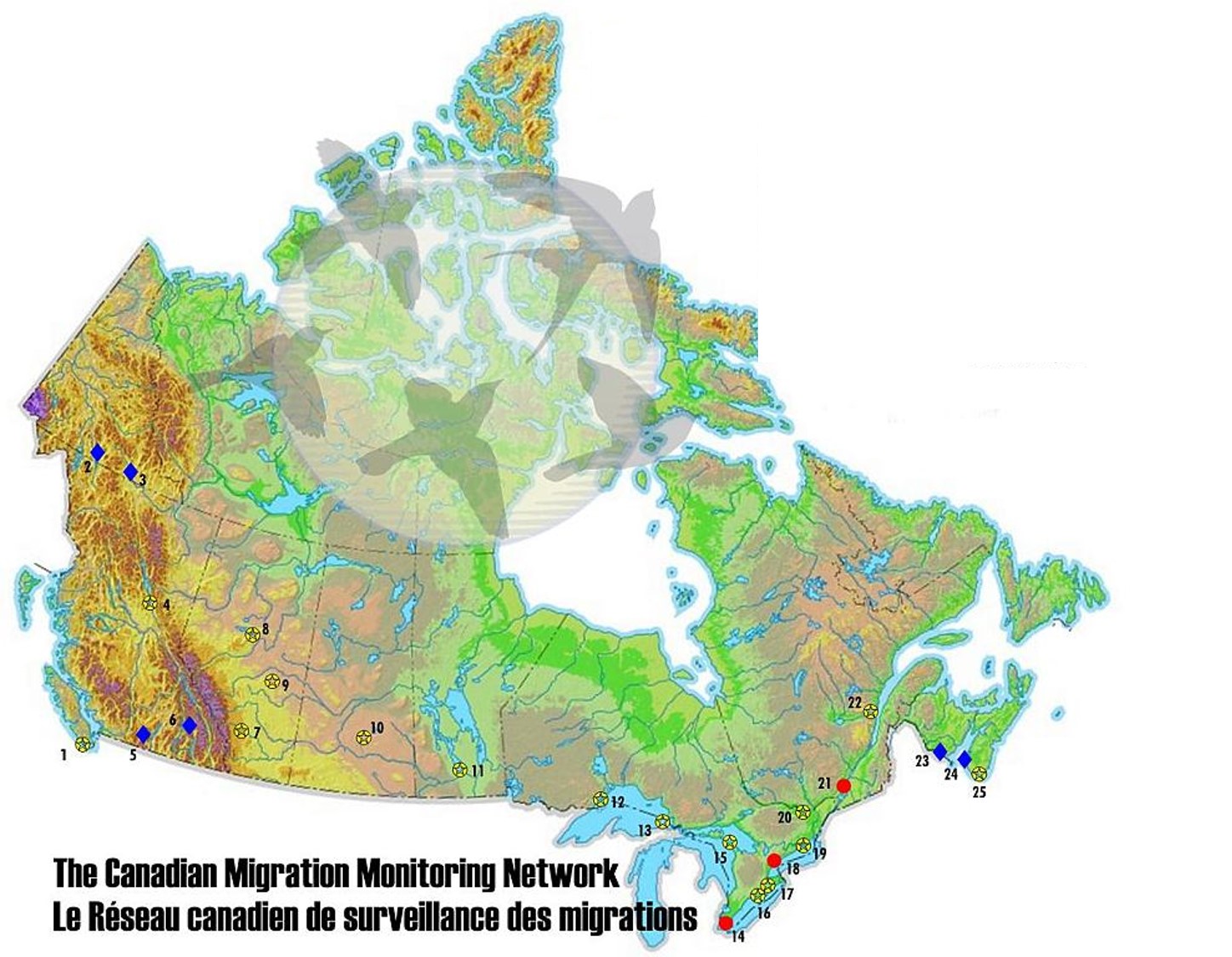
Location: LPBO operates three migration monitoring stations on Long Point, a 32 km-long sandspit on the north shore of Lake Erie. Two of the field stations (Tip and Breakwater) are accessible by boat only, while the third station at the base of the point (Old Cut) is road-accessible and is open to the visiting public (adjacent to Long Point Provincial Park). The nearest communities are Port Rowan (10 km), Simcoe (45 km), and Tillsonburg (35 km). Nearby airports are Hamilton (90 km), London (100 km), and Toronto (180 km). An airport shuttle service is available from Toronto (Pearson) to LPBO.

Special Features: Long Point attracts large numbers of landbirds and waterfowl during migration. On average, over 20,000 landbirds of about 150 species are banded annually. More than 370 bird species have been recorded in the Long Point checklist area. The on-line LPBO Sightings Board is updated weekly during the migration seasons.

Long Point is recognized as a globally Important Bird Area (IBA), a World Biosphere Reserve, and an international Monarch Butterfly Reserve. Much of Long Point is formally protected by a combination of federal, provincial, and regional agencies, along with private hunting clubs.

History: Long Point Bird Observatory (LPBO) was founded by the Ontario Bird Banding Association in 1960 and is the oldest institution of its kind in the Western Hemisphere. LPBO was formally incorporated as a non-profit research organization in 1968. After thirty years of growth and development, the name of the corporation was changed to Bird Studies Canada to reflect the national scope of its expanded suite of programs. Since 1998, LPBO has continued to operate as a local program of BSC.

Migration monitoring: The standard migration protocol at each station consists of a minimum of 6 hours of banding each day, a one-hour daily census along a standardized route, and recording numbers of migrants observed throughout the day. Birds are captured using a combination of mist nets, Heligoland traps, Jay traps, and ground traps. At the end of each day, volunteers compile the day's information and use these data to estimate the total number of individuals of each species occurring at each station.

Spring migration coverage generally runs from 1 April through 10 June. Fall migration coverage typically runs from 15 August through 10 November. Spring and fall count data have been collected annually since 1960.

Other projects: The migration program is the central activity of the Observatory, but other on-site programs include a long-term breeding study of Tree Swallows (1 May to 10 July), and breeding-bird censuses (25 May to 5 July) in 15 permanent plots on Long Point. Daily counts of migrating Monarch Butterflies are conducted during fall migration. LPBO also runs the Doug Tarry Young Ornithologists Workshop -- an intensive field course for teenagers -- each summer.

Volunteer opportunities: LPBO relies heavily on volunteer assistance in one form or another. On-site accommodations are available at the field stations for up to 20 staff, volunteers and researchers. Most on-site volunteers come for a minimum of one-month period and receive training in bird banding and migration monitoring. Shorter-term volunteers are also welcome, but pay a nominal fee to cover accommodations and food. In addition, the Friends of LPBO are volunteers from the local community who help out at the Old Cut station one morning a week by providing information to visitors and manning the visitor centre and gift shop.

For more information:

Website: www.bsc-eoc.org/longpoint/lpbomain_en.html

Contact Person:
Landbird Programs Coordinator
Email: lpbo@bsc-eoc.org
Tel: 519-586-2885 (Old Cut Field Station); 519-586-3531 (BSC Headquarters)
Fax: 519-586-3532
Mailing Address: Bird Studies Canada, P.O. Box 160, Port Rowan, ON Canada N0E 1M0


Site Map
Return to Top of Page
Return to Previous Page