Recovering Species of Highest Concern
Recovering species of highest concern by addressing the key threats to their survival, such as the loss of prairie grasslands, insect declines, and development in coastal and marine environments
How Are Birds Doing in Canada?
Our science tells us which bird species are thriving, and which are not. This information is at the core of how and where we choose to work. The State of Canada's Birds Report provides a national overview of how Canada's birds are faring, highlights key conservation stories, and helps people understand how they can support birds.
Our vision is for all of Canada’s bird species to thrive. We measure our progress towards this vision with Birds Canada’s Thriving Birds Indicator.
It tells us that currently, only 44% of Canada’s bird species are thriving.
To recover the species that are not thriving, we focus our efforts on reducing or eliminating primary threats to their survival. We also pay special attention to species for which a large proportion of the global population occurs in Canada, as well as species which are of cultural significance.
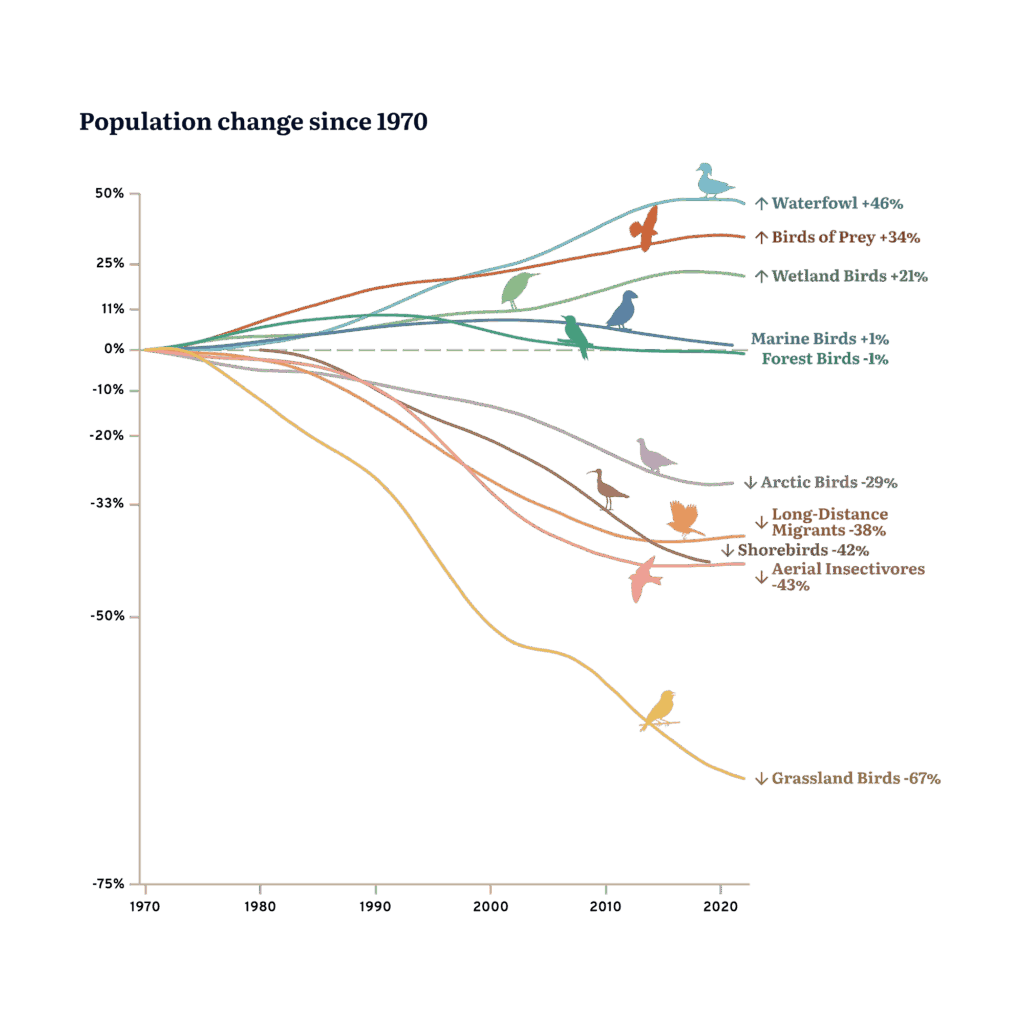
Species Recovery in Action
Grassland birds such as Chestnut-collared Longspur, Long-billed Curlew, and Baird’s Sparrow are of concern because their grassland habitat is disappearing fast. Economic factors are a key driver of this habitat loss, due to perverse subsidies which make it more profitable to convert native grasslands to crops. Birds Canada is working to counter this economic disparity in favour of incentivizing sustainable ranching that maintains native grasslands.
The Forest Birds at Risk Program focuses on monitoring, studying, and supporting the recovery of high-priority forest bird species-at-risk in southern Ontario. One of the focal species is the Endangered Cerulean Warbler. Since 2010 we have been surveying Cerulean Warblers across the Carolinian zone and supporting targeted surveys and tagging projects for Canada’s core Cerulean Warbler population in the Frontenac Arch Region.
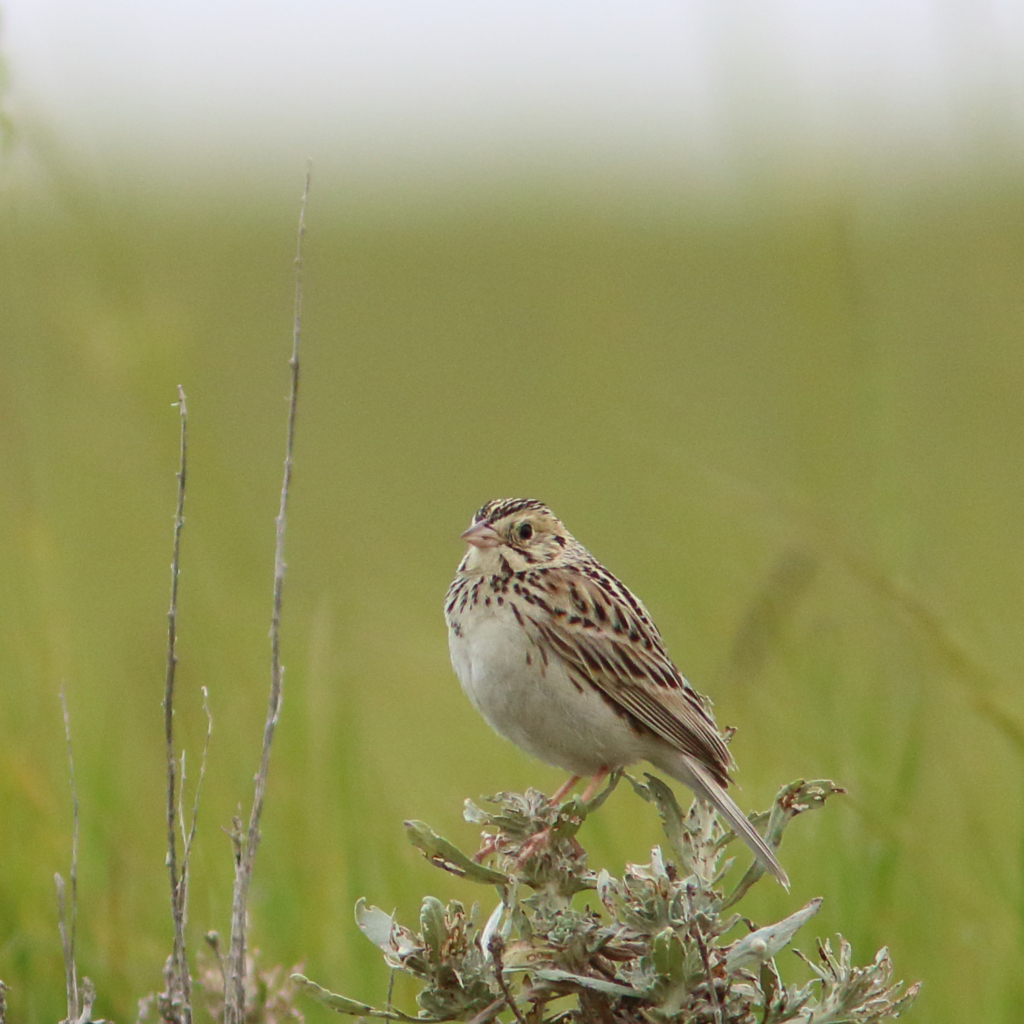
©Baird's SparrowPhoto: Sean Jenniskens
The Bicknell’s Thrush is declining throughout its range, including in the Maritimes, in large part due to habitat loss. The continued population decline shown by our last 10 years of monitoring data tells us that we are at a now-or-never moment to help this species recover. As the only long-term program dedicated to Bicknell’s Thrush in the Maritimes region, Birds Canada’s High Elevation Landbird Program provided the decades of data and expertise essential to developing the habitat protections designated in the Recovery Strategy for Bicknell’s Thrush in New Brunswick (2026).
Threatened Chimney Swifts are long-distance migrants facing a number of threats, including the loss of roosting habitat – which nowadays include human-made structures such as chimneys. Birds Canada monitors the use of chimneys by this species across several provinces, working to ensure these structures are protected and restored.
The Common Loon is a culturally significant species for many peoples. More than 90% of the global population depends on Canadian lakes for breeding. Loons are producing fewer and fewer young, through a combination of threats with climate change at their nexus. Birds Canada and its partner QuébecOiseaux mobilize over 4000 volunteers to monitor and steward lakes with loons, including advocacy to reduce threats such as disturbance from boats and lead-based fishing gear.
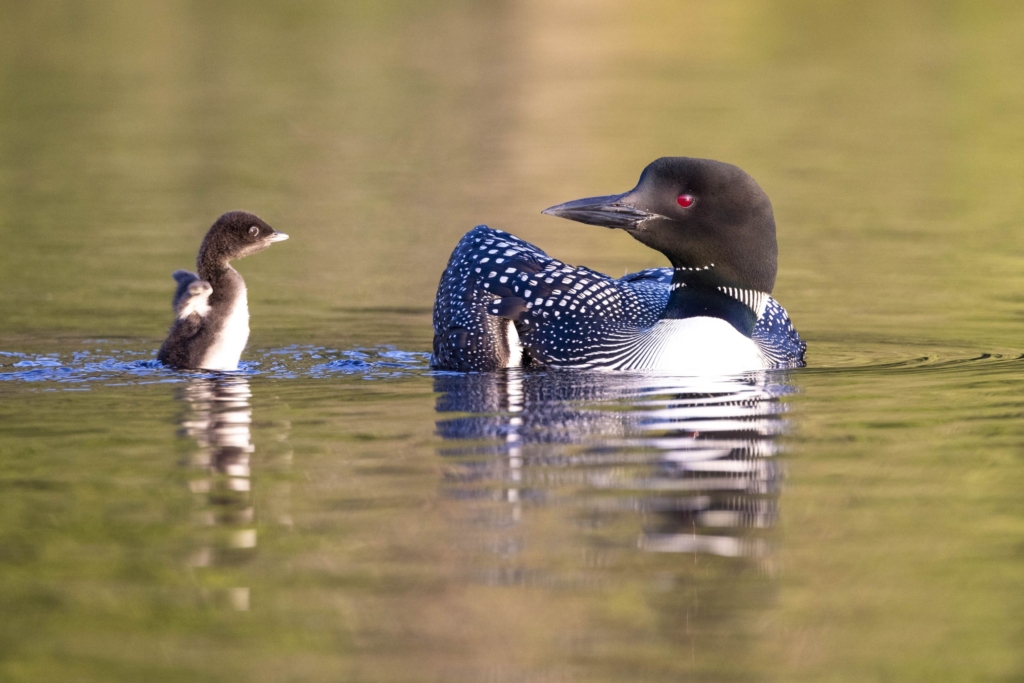
©Common LoonsPhoto: Mark Peck
Recovery Takes All of Us
Recovering birds at risk takes long-term planning and collective action. See how we're guiding conservation across Canada, and discover simple ways you can help birds thrive every day.