The Prairie & Parkland Marsh Monitoring Program

Wetlands are characteristic of the North American prairie and parkland landscape. About 10,000 years ago, when continental ice sheets receded from this region, they left the landscape pocked with countless shallow depressions commonly referred to as 'prairie potholes'. These potholes, permanently or periodically flooded with water, exist as wetlands. Wetlands provide essential ecological goods and they also offer valuable habitat for a diverse array of wildlife.

The same glacial event that created the region's pothole wetlands has contributed to the nutrient rich soils of the North American prairie and parkland. Favourable soil conditions, coupled with a suitable climate, have made this region particularly amenable to human settlement. As a result, the prairie and parkland region has experienced dramatic changes since the turn of the 20th century. Among these changes has been the considerable loss and degradation to wetland habitat, so much so that wetland losses range 50-90% in some areas. Unfortunately, the threat of wetland loss and degradation continues today.

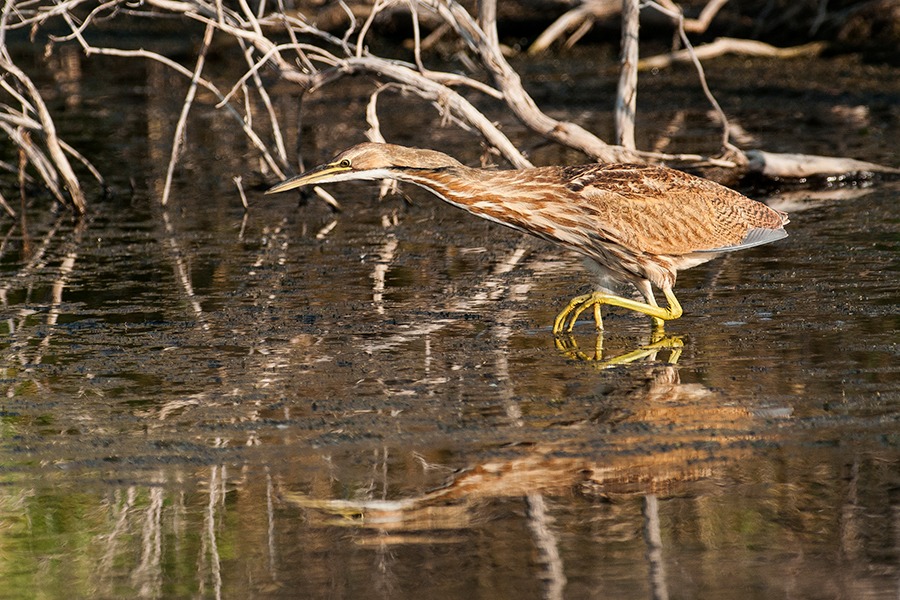
Despite the remarkable landscape-level changes that have been made to prairie and parkland habitats, the area remains among North America's most important regions for birdlife. Pothole wetlands and adjacent uplands are particularly renowned for their significance to support populations of breeding and migrating waterfowl. Because of this, the region has earned the moniker 'the duck factory'. It is intuitive that many of the same features that make this region valuable to waterfowl also make it important to 'waterbirds', an assemblage that includes grebes, herons, rails (the so-called 'marsh birds'), as well as terns, cranes, and others. Over 30 species of waterbirds breed within the prairie and parkland; many of these species are thought to reach their highest densities within the region. Although there is an innate recognition of this region's importance to waterbirds, information regarding population distributions, species-habitat relationships, species abundance, and population trends is limited or completely lacking for many of these species. This gap in our understanding exists because annual or periodic surveys for waterbirds have not been thorough, nor have they occurred consistently. As a result, management agencies are limited in their ability to assess the state of waterbird populations and conservation partners are hindered in their efforts to further develop conservation planning.

In 2007, Bird Studies Canada met with members of the Prairie Habitat Joint Venture to discuss a collaborative effort to address information deficiencies for wetland-associated birds in the prairie and parkland region. As a result of these discussions, and with support from Wildlife Habitat Canada, the Prairie and Parkland Marsh Monitoring Program (PPMMP) was established. Currently program activities are geared toward determining the link(s) between waterbird species occurrence and habitat characteristics at various spatial scales. This information will serve efforts to conserve and manage habitats for wetland-associated birds, and represent initial and vital steps toward the development and implementation of a long-term waterbird monitoring program in the region.

Who can participate?

Anyone who is interested in wildlife is invited to participate with a project that will benefit efforts to conserve of wetlands and their inhabitants. Participants conduct surveys of marsh birds to collect data that is essential to aiding our understanding of these species and to developing tools that help to guide habitat conservation efforts. PPMMP participants range from the amateur naturalist to the professional biologist. Although it is not necessary to be an ace-birder to take part in the PPMMP, the marsh bird survey is not suitable for novices. As a general guideline, participants need to be able to identify about 60 species of wetland-associated birds by sight and about half these by sound.

To assist survey preparation, each PPMMP participant receives a training kit that includes:

  • Detailed instructions for conducting bird surveys and describing habitat conditions
  • A training CD that includes vocalizations of bird species most likely to be encountered in or near marshes
  • A broadcast CD that is used during the survey

The training CD is designed to be a useful refresher to fine-tune your skills and provides additional tips for the identification of wetland-associated birds. Included on the training CD is a short recording of a marsh so that participants can test their auditory bird identification skills. A key of species included on the marsh recording will accompany this recording.

What is involved in a Prairie & Parkland Marsh Monitoring Program survey?

PPMMP surveys consist of 15-minute visits to specified locations, referred to as survey stations. During each station visit, all birds that are seen or heard are documented. Survey stations are placed along a survey route; a route may contain as few as three or as many as eight survey stations.

Participants will be responsible for surveying one or more route(s). To survey one route requires a time investment of about 12 hours each year, although folks are encouraged to take on as many routes as they wish.

Survey routes are surveyed three times each year between May 22nd and June 30th. Minimally, surveys at a given station must be conducted at least 4 days apart, although it is ideal to have visits spaced further (8-12 days) apart.

Surveys are conducted in the early morning or in the evening. Favourable weather conditions are preferred for surveying (strong winds and rain should be avoided).

Describing marsh habitat

At the end of the survey season, participants have the option to conduct Habitat Descriptions of marshes/stations along their route. Habitat descriptions will allow us to develop a better understanding of habitat features that may be important to wetland birds; this information will contribute to the development of better management practices and ultimately the conservation of these ecosystems. Completion of the Marsh Habitat Description requires basic knowledge of plants commonly found in local wetland habitats. Participation in this part of the program is suggested only for those who are comfortable with their plant identification skills.

Where are surveys conducted?

The PPMMP has study locations throughout the Prairie Provinces. Because the main focus of the PPMMP is to understand how species occurrence relates to habitat characteristics, study sites are currently limited to locations where sufficient information of wetland and surrounding habitat is available; habitat information currently used by the PPMMP has been generously provided by the Institute for Wetland and Waterfowl Research. We hope to expand our operating area in the near future so the Marsh Monitoring Program is more easily accessible from a broader range of locations.

Prairie marshes need your help! To register or to receive more information, contact us at the following address:

Prairie & Parkland Marsh Monitoring Program
Bird Studies Canada
115 Perimeter Road
Saskatoon, Saskatchewan, S7N 0X4
1-306-249-2894
prairieprograms@birdscanada.org


Site Map
Return to Top of Page
Return to Previous Page